

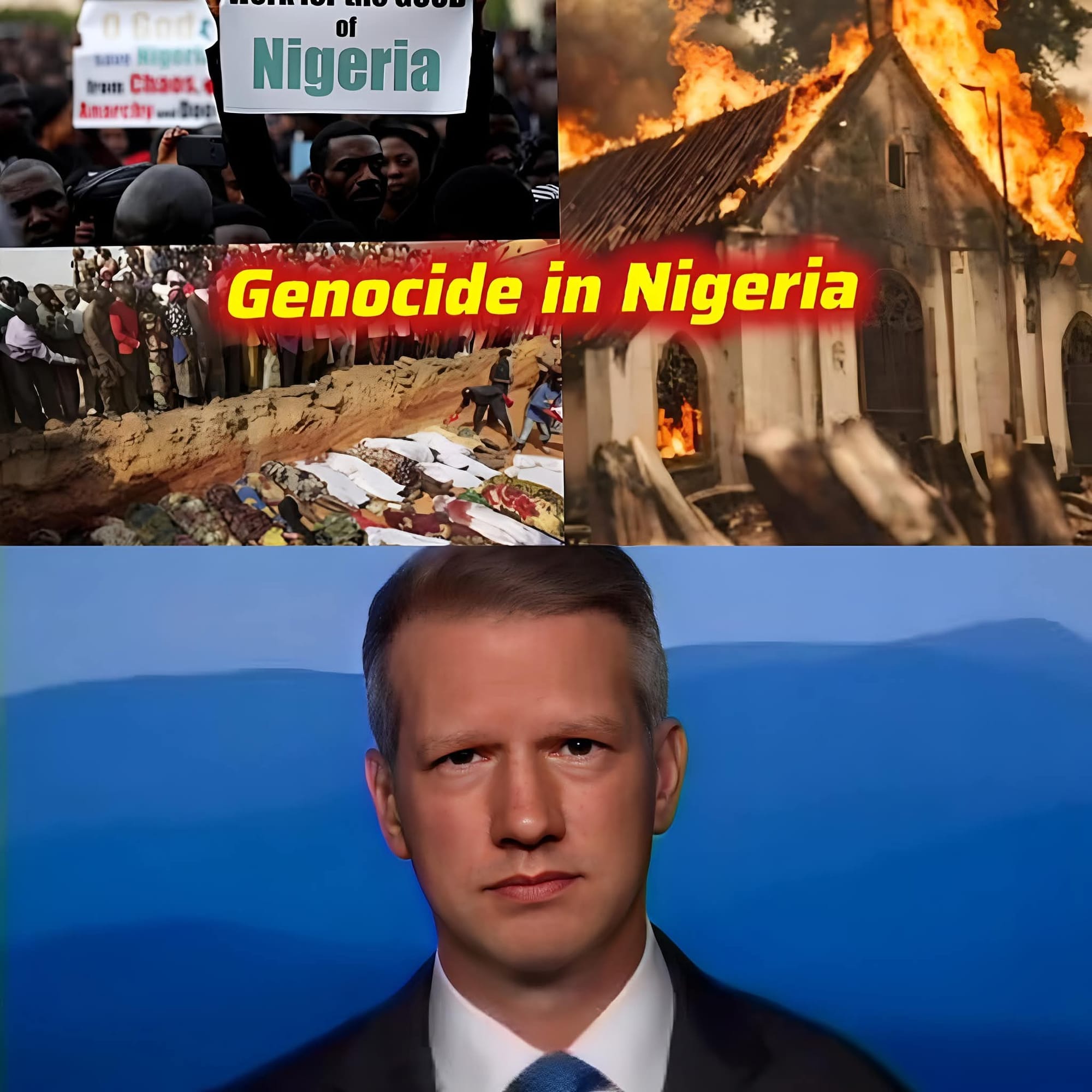
Senior International Affairs Correspondent
Dateline: WASHINGTON D.C.
In the hushed, marbled halls of the United States Capitol, a voice rang out with a stark and grave warning, cutting through the usual partisan din to spotlight a crisis unfolding over 6,000 miles away. Representative [Congressman’s Name], his tone measured but freighted with urgency, stood before a gathering of press and policymakers to declare that Christian communities in Nigeria are “under systematic attack,” facing an existential threat that has escalated with chilling brutality. His declaration came amid verified reports that the Islamic State West Africa Province (ISWAP), a potent branch of the ISIS terror network, has issued a stark “convert or die” ultimatum across swathes of the nation’s troubled Middle Belt and Northeast.
This congressional alarm is not an isolated political statement but a piercing spotlight on a complex, metastasizing conflict that intertwines religious persecution, ethnic strife, criminal banditry, and the global jihadist agenda. It paints a harrowing picture of a nation, Africa’s most populous and a key strategic ally, grappling with fragmentation and violence that threatens not only its own future but regional and global security.
The Anatomy of a Multifaceted Assault:
To understand the congressman’s warning, one must first disentangle the knotted threads of violence plaguing Nigeria. The threat is not monolithic but a hydra-headed beast.
The most ideologically explicit danger emanates from Boko Haram and its more lethal splinter, ISWAP. While originally focused on overthrowing the Nigerian state, these groups have increasingly zeroed in on Christian communities as explicit targets of their caliphate project. Their tactics have evolved from indiscriminate suicide bombings to targeted raids on villages, churches, and religious gatherings. The “convert or die” edict, circulated through handwritten notes, sermons by captured preachers, and social media channels, represents a formalization of this genocidal intent. In recent months, this has translated into the massacre of worshippers at Pentecostal services, the abduction of clergy, and the desecration of churches, with victims given the grotesque “choice” between apostasy and death.
Simultaneously, and often conflated in the public narrative, is the escalating conflict between predominantly Muslim Fulani pastoralists and predominantly Christian farmers from ethnic groups like the Berom, Afizare, and Irigwe. Driven by climate change-induced desertification, expanding farmlands, and a collapse of traditional conflict-resolution mechanisms, competition for land and water has exploded into horrific violence. Armed bands, often referred to as “armed herders,” launch coordinated, pre-dawn raids on villages, employing sophisticated weaponry. The resulting carnage—burned homes, slaughtered families, decimated communities—bears the hallmarks of ethnic cleansing, with religious identity serving as a potent marker of difference.
Compounding this is the epidemic of criminal banditry in the northwest and central regions. While initially driven by economic gain, kidnapping for ransom, and cattle rustling, these criminal enterprises have increasingly taken on a sectarian tint, targeting Christian communities perceived as vulnerable or prosperous. The line between financially motivated kidnapping and religiously targeted abduction has blurred catastrophically, with groups showing little hesitation in executing those who resist or whose faith makes them a target.
A Landscape of Suffering: Testimonies from the Front Lines:
Behind the congressman’s stark pronouncement lies a landscape of profound human suffering. In internally displaced persons (IDP) camps across Plateau, Benue, Kaduna, and Taraba states, thousands subsist on memories of shattered lives.
In a camp outside Jos, capital of Plateau State, Miriam Joshua, a 42-year-old mother of four, recounts the night her world ended. “They came with guns and machetes, shouting ‘Allahu Akbar.’ They set the church on fire first, then went house to house. My husband… they shot him when he tried to shield our children. They took my eldest son. I heard them say he would ‘serve.’” Her story is not unique. Local NGOs and church groups document thousands of such incidents yearly, often with little national attention and less international outcry.
Reverend Gideon Obadiah, a pastor in southern Kaduna, speaks of a constant siege mentality. “We hold our services in fear. We have young men watching the bushes. The police are never there when the attack comes. They arrive hours later to count bodies. The message from the terrorists is clear: your faith makes you a foreigner in your own land.”
The persecution extends beyond mere violence to a systematic dismantling of community and economy. Farmlands lie fallow, seized or rendered too dangerous to work, creating a cycle of food insecurity and dependency. Schools are shuttered, ensuring a lost generation. The social fabric, woven over centuries of coexistence in many areas, is being torn asunder, replaced by mutual suspicion and hardened sectarian identities.
The Geopolitical Echo: Why a U.S. Congressman is Speaking Out:
Representative [Congressman’s Name]’s intervention is significant within a broader geopolitical context. For years, a bipartisan coalition in the U.S., including lawmakers, advocacy groups like the International Committee on Nigeria (ICON) and the Holocaust Museum’s Early Warning Project, and religious freedom commissions, has pressured the State Department to redesignate Nigeria as a “Country of Particular Concern” (CPC) for severe violations of religious freedom—a status it held in 2020 but lost in 2021. Critics argue the delisting was a political decision, divorcing policy from the grim realities on the ground.
The congressman’s statement is thus a direct challenge to the administration’s narrative. It frames the crisis not as a series of unrelated communal clashes or mere criminality, but as a targeted campaign of religious persecution with global jihadist linkages. This framing carries implications for security assistance, refugee policy, and diplomatic pressure.
“When an ISIS affiliate publicly declares a religious genocide, and we see that blueprint being executed with terrifying consistency, the world cannot look away,” the congressman asserted. “This is a direct assault on a fundamental human right—the freedom of conscience and belief. Our silence, or our softening of terms, becomes complicity.”
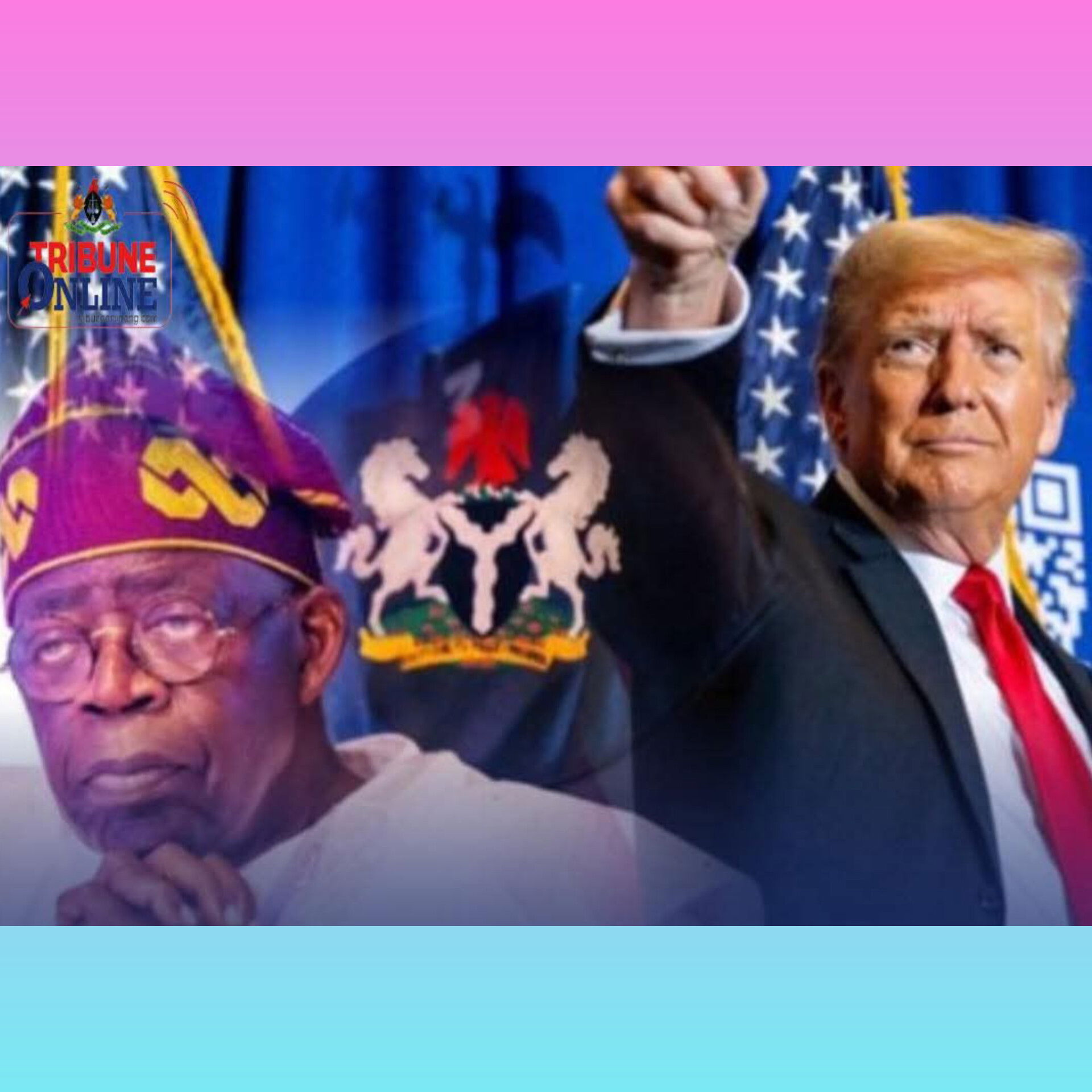
The Nigerian federal government, led by President Bola Tinubu, has consistently pushed back against such characterizations. Officials in Abuja argue that the violence is primarily driven by climate change, resource competition, and historical grievance, and that labeling it as religious persecution oversimplifies a complex issue and undermines national unity. They point to military operations against terror groups and efforts at farmer-herder reconciliation. However, critics counter that government responses are often slow, ineffectual, and tainted by allegations of bias and corruption within security forces, leaving communities to form largely Christian self-defense militias, which in turn fuel cycles of reprisal attacks.
Regional and Global Ramifications: A Tinderbox Ignited:
The instability in Nigeria’s heartland has repercussions far beyond its borders. The nation is the anchor of West Africa. Its potential fragmentation or descent into wider sectarian civil war would trigger a tsunami of consequences.
The humanitarian fallout is already staggering, with millions displaced internally and across the Sahel, straining the resources of neighboring countries like Chad, Niger, and Cameroon, themselves battling insurgencies. This displacement creates fertile recruiting grounds for terrorist organizations, offering destitute youths sustenance and purpose within a radical ideology.
Furthermore, Nigeria’s status as a major oil producer and the continent’s largest economy means that internal chaos disrupts global energy markets and scares away vital foreign investment. A failed Nigeria would create a vortex of instability, drawing in regional powers and potentially providing a safe haven for international terrorist networks, transforming a national crisis into a global security threat.
The Path Forward: Between Intervention and Sovereignty:
The congressman’s warning implicitly calls for a recalibrated international response. This path is fraught with difficult questions of sovereignty, capacity, and strategy.
Proposed actions include:
· Targeted Sanctions: Imposing visa bans and asset freezes on specific individuals—security officials, local administrators, or militia leaders—implicated in orchestrating violence or allowing impunity.
· Conditional Security Aid: Tying U.S. military training and equipment to verifiable benchmarks, such as the protection of vulnerable communities, prosecution of perpetrators, and the integration of religious freedom metrics into operational planning.
· Robust Diplomatic Engagement: Elevating the issue in bilateral and multilateral forums, including the UN Security Council, and supporting regional bodies like ECOWAS in developing conflict early-warning systems.
· Humanitarian and Developmental Focus: Directing significant aid to rebuild ravaged communities, support trauma care, and fund climate-resilient agricultural practices to address root causes of resource conflict.
· Support for Civil Society: Bolstering local peacebuilding initiatives that work across religious and ethnic lines, and protecting journalists and activists who document the violence.
Ultimately, the solution must be Nigerian-led. It requires a demonstrable political will from Abuja to protect all citizens equally, a comprehensive security strategy that prioritizes civilian protection over territorial control, a robust and impartial judiciary to end the cycle of impunity, and a genuine national dialogue addressing land use, citizenship, and the place of religion in the public square.
A Moral and Strategic Imperative:
As Representative [Congressman’s Name] concluded his remarks, the weight of his message settled over the room. “This is not about intervening in a foreign nation’s affairs. It is about standing for the principles that bind our own humanity. When people are hunted for their faith, when children are taught that their neighbor is an infidel to be eradicated, when the symbol of the cross becomes a target for annihilation, the darkness does not remain contained. It spreads.”
The crisis in Nigeria is a crucible. It tests the international community’s commitment to the principle of “never again.” It challenges Nigeria’s own founding ideals of unity and faith, peace and progress. And for the Christians and other vulnerable communities caught in the crosshairs of terror and strife, it is a daily reality of fear, loss, and a desperate struggle for survival. The congressman’s warning is a stark reminder that in an interconnected world, a cry in the Nigerian night is a sound the world must, and does, hear. The question that remains is whether that hearing will be followed by action, or lost in the silence of indifference. The answer will define not only Nigeria’s future, but the conscience of a global order built on the ashes of past persecutions.