

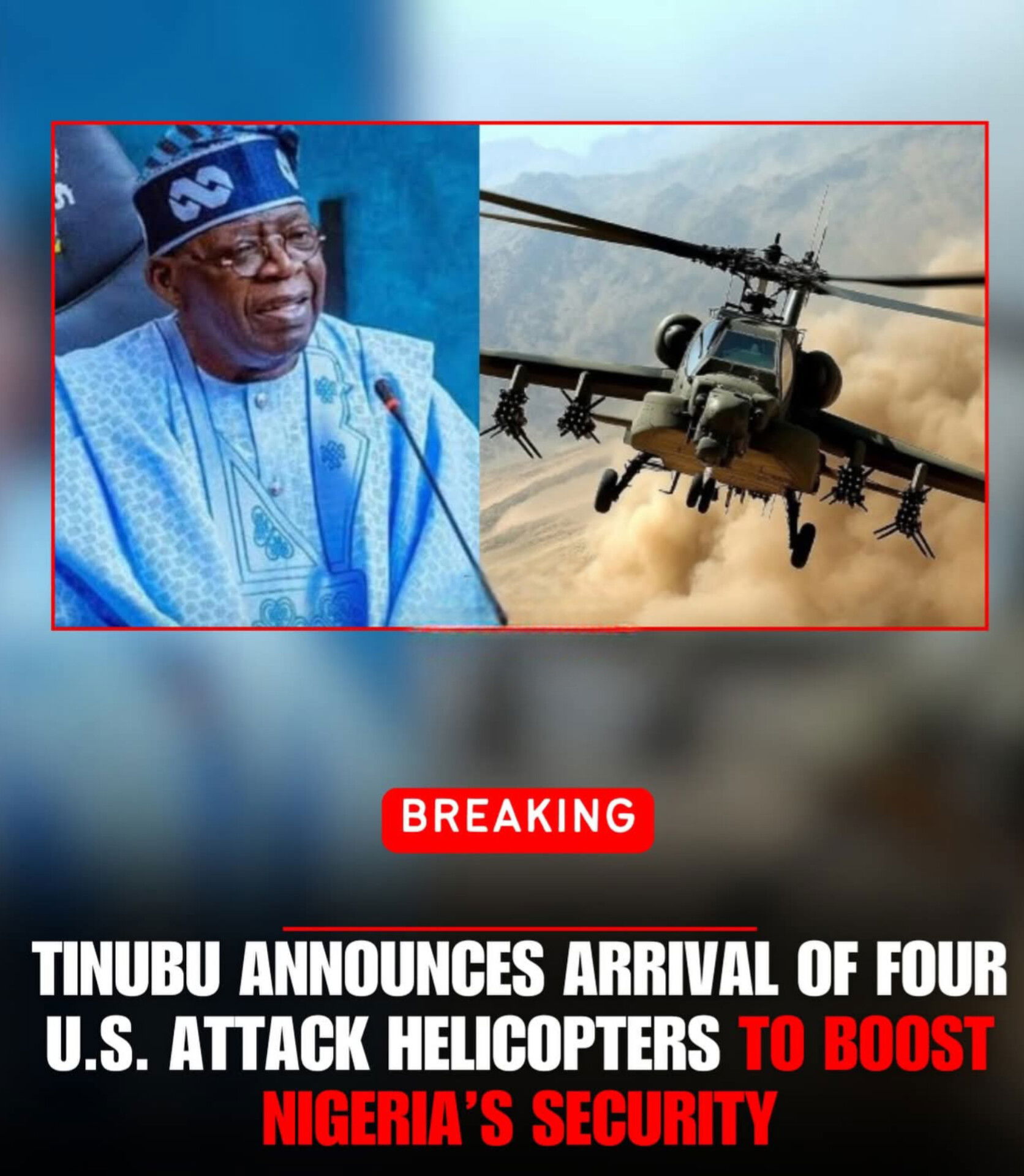
EXCLUSIVE: Presidential Pledge in the Pulpit – Tinubu Announces Major Security Boost as New U.S. Helicopters Set to Touch Down
In a significant and candid address that blended spiritual solace with security strategy, President Bola Ahmed Tinubu yesterday delivered a major update on Nigeria’s fight against insecurity, announcing the imminent arrival of a powerful new arsenal: four advanced attack helicopters procured from the United States.
The revelation came not in a sterile briefing room, but during a heartfelt dialogue with leaders of the Christian Association of Nigeria (CAN), a setting that underscored the deep national yearning for peace. The President’s tone was both resolute and reassuring, framing the new hardware as a critical piece in a broader, relentless push to reclaim the nation’s security landscape.
"These birds will be in our skies soon," the President told the attentive religious leaders, signaling a tangible upgrade to the military’s operational firepower. The helicopters, sophisticated platforms known for precision and agility, are expected to dramatically enhance the Armed Forces’ ability to strike terrorist enclaves, dismantle bandit camps, and conduct vital intelligence, surveillance, and reconnaissance (ISR) missions across vast and often difficult terrain.
Analysts are quick to note that this move addresses a long-identified gap. "The acquisition of dedicated attack helicopters is a game-changer," says retired Air Commodore Gabriel Oshin, a security consultant. "They provide immediate aerial support for troops on the ground, can respond rapidly to distress calls, and their presence alone acts as a strong deterrent. This is about owning the airspace over troubled regions."
But President Tinubu was careful to present the helicopters not as a standalone solution, but as part of a sweeping, multi-layered strategy. He spoke earnestly about the administration’s wider vision, which extends far beyond the battlefield.
A Two-Pronged Approach: Technology and Community:
Central to this vision, the President revealed, are "ongoing and serious discussions" around the establishment of formalized state police and community policing frameworks. This acknowledgment aligns with widespread calls for a more localized security approach, recognizing that those who know the forests, farmlands, and communities intimately are often best placed to secure them.
"It’s about integration," a senior security source explained. "The federal might—represented by assets like these new helicopters—will work in concert with local intelligence and boots on the ground. The helicopters can respond to a tip-off from a community watch group; the state police can hold territory cleared by a military offensive. It’s a force multiplier."
This holistic narrative was clearly aimed at reassuring a populace weary from the scars of conflict. President Tinubu directly addressed this fatigue, assuring all Nigerians of his administration’s "unshakable commitment to restoring peace and stability." His message to the CAN leaders was, in essence, a message to the nation: your security is our paramount objective.
Context and Reaction:
The announcement comes at a critical juncture. With security challenges persisting in the Northeast, Northwest, and parts of the North Central regions, public demand for decisive action has been palpable. The purchase from the United States also signals continued strategic security partnership between the two nations, following other recent defense agreements.
Reactions have been cautiously optimistic. CAN President, Archbishop Daniel Okoh, praised the President’s openness and pledged the continued support of the Christian community, emphasizing the role of faith and prayer alongside governmental action. "We are encouraged by this direct communication and the concrete steps being taken," Archbishop Okoh stated.
On the streets of Abuja and in online forums, the news has sparked a mix of hope and measured expectation. "It’s a good step, let’s see them in action," commented Chika Obi, a civil servant in the capital. "We need all the help we can get. But true peace will come when there are jobs and justice too."
The Road Ahead:
While the arrival of the helicopters marks a tangible milestone, observers note the real test lies ahead in their deployment, maintenance, and integration into a coherent tactical plan. Furthermore, the promised push for constitutional reforms to enable state policing will require careful legislative navigation and broad consensus.
For now, the administration has sent a powerful signal: it is investing in the tools of modern warfare while simultaneously laying the groundwork for a more rooted, community-centric security architecture. President Tinubu’s choice to share this update in a forum of faith leaders has framed the entire security mission not just as a military campaign, but as a national moral imperative.
As the nation awaits the distinct roar of the new helicopters joining the fleet, the message from the Presidency is clear: the fight for Nigeria’s peace is being taken to a new altitude, with a strategy aiming to be as comprehensive from the ground up as it is formidable from the sky down. The journey to stability continues, but with a significant new wingman now en route.