

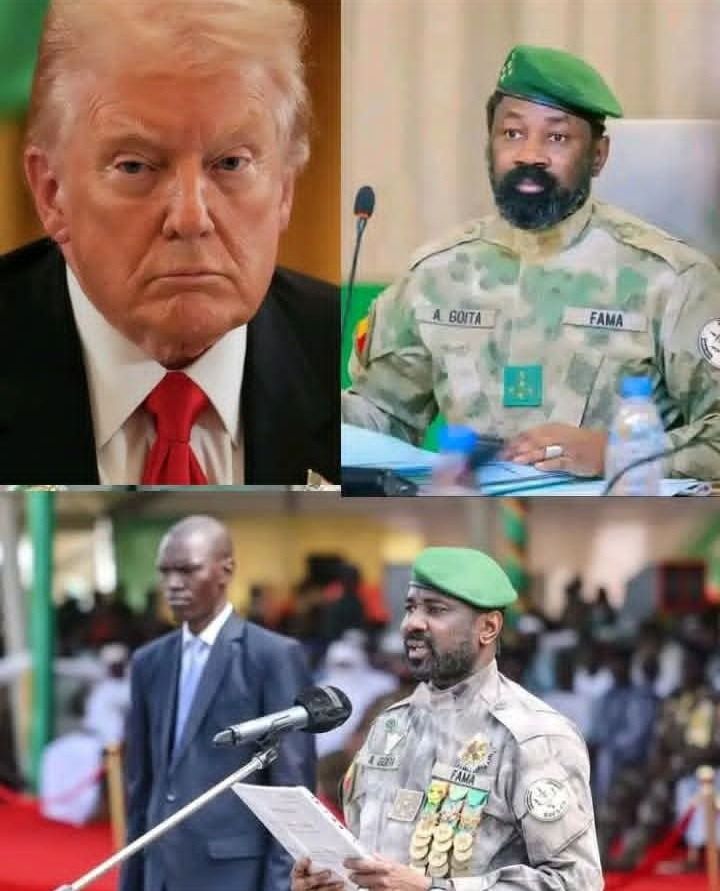
A Diplomatic Tug-of-War: The U.S. and Mali’s High-Stakes Visa Standoff
In a striking demonstration of how immigration policy can become a powerful tool of diplomatic signaling and reciprocal politics, the United States has quietly removed Mali from its controversial list of countries subject to a high-value visa bond requirement. This move, confirmed by diplomatic sources in recent weeks, comes as a direct response to a bold and unconventional retaliatory measure from Mali’s military junta: the imposition of a mandatory $10,000 visa fee on American citizens. This escalating tit-for-tat over entry permissions reveals the deepening fractures in U.S.-Mali relations and underscores a broader shift in how some African nations are challenging long-standing asymmetries in global mobility and power.
The Genesis: The U.S. Visa Bond Pilot Program:
To understand the significance of this development, one must first revisit the U.S. visa bond policy. Announced in the final weeks of the Trump administration in 2020, the pilot program mandated that visa applicants from 23 countries—including several African nations like Mali, Burkina Faso, and Eritrea—could be required to post a refundable bond of $5,000 to $15,000. The stated goal was to deter overstays on temporary business and tourist visas. The policy was widely criticized as a discriminatory financial barrier that targeted poorer nations, effectively creating a multi-tiered global mobility system where applicants from certain countries were presumed to be a higher flight risk solely based on their nationality.
For Mali, a nation grappling with a severe political crisis since the coups of 2020 and 2021, this bond was more than an administrative hurdle. It was perceived as a slight, an economic sanction layered atop existing travel restrictions and a symbol of a deteriorating relationship with a former security partner. The U.S. had suspended most military assistance following the undemocratic seizures of power, and the visa bond added a personal, costly dimension to the diplomatic chill for Malian citizens seeking to travel to America.
Bamako’s Bold Retaliation: The $10,000 “Reciprocity Fee”:
The plot thickened dramatically when Mali’s military leader, General Assimi Goïta, enacted a policy of stark reciprocity. In a move that caught international observers by surprise, the transitional government instituted a compulsory $10,000 visa fee for citizens of the United States. The rationale, though not explicitly framed as retaliation, was clear: to mirror the financial and symbolic imposition placed on Malians.
This was a calculated power play. It signaled a fundamental shift in posture from Bamako. No longer passively accepting conditions set by Western powers, the junta, which has increasingly pivoted towards strategic alliances with Russia’s Wagner Group and other non-Western actors, was demonstrating its willingness to engage in hardball diplomacy. The $10,000 fee was not merely a revenue generator; it was a political statement. It declared that Mali would meet perceived disrespect with equal measure, turning the tables and forcing American travelers—often diplomats, aid workers, journalists, and businesspeople—to confront a significant barrier of their own. In essence, Mali weaponized its own visa policy to protest what it saw as a punitive and unfair U.S. system.
The U.S. Response: A Strategic Retreat:
Faced with this unexpected and costly countermeasure, the United States was presented with a dilemma. The visa bond pilot program, already limited in scope and under legal and ethical scrutiny, had now triggered a direct and embarrassing diplomatic challenge. Continuing to enforce the bond on Malians while American citizens faced a far more expensive and non-refundable fee in Mali became untenable. It created a lose-lose scenario of escalating barriers, damaging people-to-people ties, and hindering any remaining official or humanitarian engagement.
The U.S. decision to remove Mali from the bond list, therefore, represents a pragmatic, if unspoken, retreat. It is an acknowledgment that the policy backfired as a diplomatic instrument in this specific case. By stepping back, the U.S. likely aims to de-escalate the public tit-for-tat, remove the pretext for Mali’s $10,000 fee, and create space for behind-the-scenes negotiations. It is a classic diplomatic maneuver: conceding a point on a secondary issue (the bond) to regain stability and potentially leverage on more critical matters, such as Mali’s political transition, counterterrorism cooperation, or the growing Russian influence in the Sahel.
Broader Implications: Reciprocity and Shifting Power Dynamics:
This episode transcends a bilateral visa dispute. It illuminates several critical trends in contemporary international relations:
1. The Rise of Reciprocal Diplomacy: More nations are adopting a doctrine of strict reciprocity in response to Western policies they deem unfair. Mali’s move follows similar actions by other countries that have imposed mirror fees or restrictions in response to visa hurdles from the U.S. or EU. This challenges the unidirectional nature of global mobility norms and forces powerful states to recalculate the costs of exclusionary policies.
2. Visa Policy as Geopolitical Leverage: In an era of great power competition, especially in strategic regions like Africa, visa regulations are no longer seen as purely administrative. They are instruments of statecraft. Mali’s alignment with Russia gave it the confidence to take this step, knowing it had alternative partners. The visa feud thus becomes a microcosm of the larger contest for influence in the Sahel.
3. The Erosion of U.S. Leverage in the Sahel: The swift and effective retaliation by a relatively small, crisis-stricken nation highlights the limits of U.S. coercive tools in a region where its influence is waning. Traditional levers like aid suspensions and visa restrictions are proving less effective against regimes that are consolidating power domestically and seeking alliances elsewhere.
Conclusion: A Stalemate with Unclear Future
The immediate standoff may be over, but the underlying tensions are far from resolved. While the removal of the bond may lead Mali to reconsider its $10,000 fee, the fundamental rift in relations remains. The incident has exposed raw nerves and demonstrated that assumptions about the deference of smaller states can no longer be taken for granted.
The U.S.-Mali visa skirmish serves as a potent case study. It shows that in today’s multipolar world, even peripheral diplomatic tools can trigger significant confrontations. It underscores that dignity and reciprocity are powerful motivators in foreign policy, often as compelling as economic or security interests. As Mali and other nations continue to assert their agency, the global system of mobility and diplomacy will increasingly be shaped not just by the dictates of powerful states, but by the forceful, reciprocal pushback of those expected to comply. The $10,000 slap from Bamako did not just lead to a policy change in Washington; it resonated as a statement heard in capitals across Africa and beyond, announcing a new willingness to challenge the old rules of engagement.