

A Christmas Lunch in the Trenches: Celebrating the Frontline Defenders of Plateau’s Peace
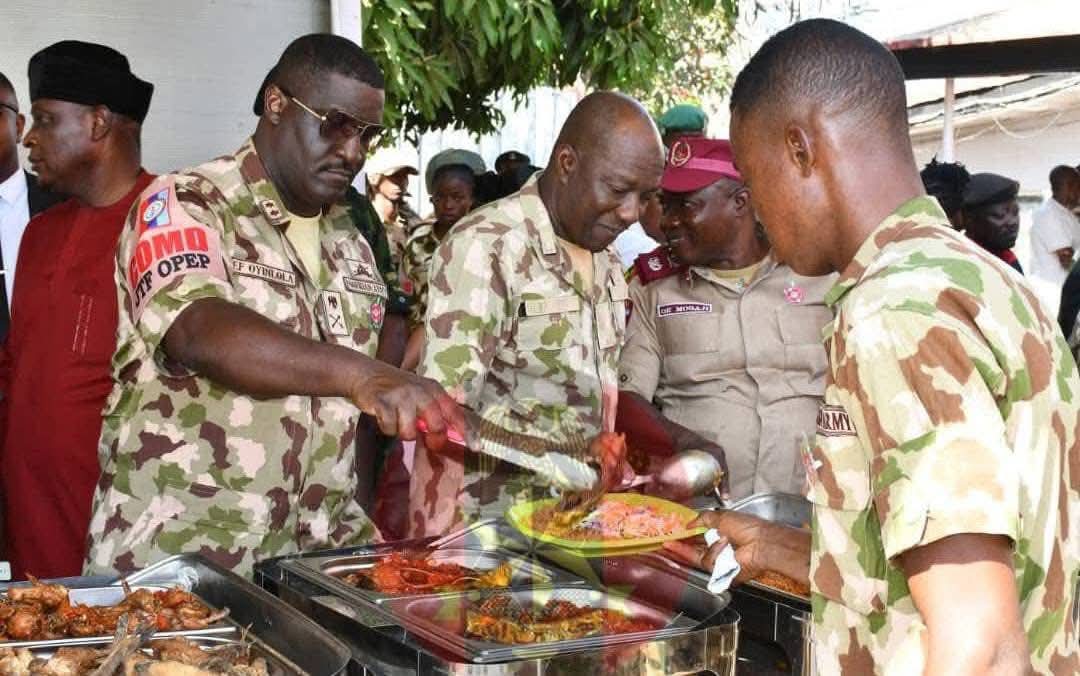
On a day when the world paused to celebrate the spirit of togetherness and goodwill, the crisp air of Plateau State carried a different, yet profoundly resonant, echo of the Christmas message. On Thursday, 25th December 2025, in a forward operating base far from the glittering festivities of city squares and family homes, a unique and powerful celebration unfolded. The Chief of Defence Staff (CDS), General O.O. Oluyede AFM, and the Chief of Army Staff (COAS), Lieutenant General W. Shaibu NAM, sat not in a banquet hall, but amidst the men and women on the frontlines, sharing a special Christmas lunch with the troops of the Joint Operations Area.
This was more than a meal; it was a potent symbol, a deliberate act of solidarity that transcended military protocol. In choosing to spend Christmas Day in the theatre of operations, General Oluyede and Lieutenant General Shaibu sent an unmistakable message: the nation’s highest military echelons stand shoulder-to-shoulder with those who bear the immediate weight of its security. The setting—Plateau State, a region that has, in recent years, grappled with complex security challenges stemming from farmer-herder clashes, banditry, and communal unrest—lent profound context to the gesture. Here, the troops’ mission of “safeguarding lives and maintaining peace” is not an abstract duty but a daily, dangerous reality.
The simple act of sharing a meal in such an environment carried deep significance. As plates were served, the hierarchical distinctions that define military structure momentarily softened. The CDS and COAS, towering figures in Nigeria’s security architecture, became, for that hour, comrades-in-arms. They listened to the troops—the infantrymen manning checkpoints, the intelligence analysts piecing together threat patterns, the medics who treat both colleagues and civilians. This direct interaction is a vital command tool, offering leadership a raw, unfiltered sense of ground truth—the morale, the challenges, the unspoken needs that reports cannot fully capture. For the soldiers, seeing their supreme commanders share in their environment, eating the same food, validates their own sacrifice. It is a tangible reminder that their endurance in the face of separation from family, harsh terrain, and constant vigilance is seen, known, and valued at the very top.
The timing, Christmas Day, amplified the emotional resonance. For many troops, this day is a poignant marker of personal sacrifice. While the country celebrated, they remained on high alert, their weapons at the ready instead of sharing gifts with loved ones. The presence of the service chiefs served as a national stand-in for those absent families, a collective “thank you” for the forfeited holiday. It transformed the narrative from one of mere absence to one of honoured duty. The lunch became a testament to a different kind of Christmas spirit: one of selfless service, protection, and the commitment to ensure that the peace enjoyed elsewhere can one day be fully realised in the communities they protect.
Furthermore, this visit by General Oluyede and Lieutenant General Shaibu was a critical morale operation. Military history underscores that the will to fight is as important as the weapons used. Morale is the invisible fuel of any armed force. In counter-insurgency and peacekeeping operations, where progress can be slow and threats are asymmetrical, maintaining high spirits is a constant battle. The psychological impact of feeling isolated or forgotten can be as damaging as enemy fire. By celebrating with them on a major holiday, the leadership actively counters this erosion. It reinforces a sense of belonging to a honoured profession and a national cause greater than the individual. The troops return to their posts after such an event with a renewed sense of purpose, reminded that they are not just cogs in a machine, but the honored defenders of the nation’s fabric.
Beyond morale, the event also served as a strategic assessment. While the occasion was festive, it provided the CDS and COAS with a vital, on-the-ground perspective. They could observe firsthand the conditions of the base, the state of equipment, and the demeanour of the personnel. This informal setting often yields insights that formal briefings in Abuja might miss. It allows for candid conversations that can inform future logistical, tactical, and welfare decisions, ensuring that strategy is grounded in the reality faced by those who execute it.
Ultimately, the Christmas lunch in Plateau State was a powerful public diplomacy tool, both for the military institution and the nation. It projected an image of a leadership that is connected, compassionate, and confident. To the Nigerian public, it demonstrated that the men and women entrusted with their security are themselves valued and cared for by their commanders. To the communities in Plateau and the surrounding Joint Operations Area, it was a reassurance of the state’s unwavering commitment to restoring and upholding peace. And to any adversarial elements, it broadcast a message of unwavering resolve and unity within the ranks of the armed forces.
As the day drew to a close and the commanders departed, the troops remained, their vigil unchanged. But something intangible had shifted. The shared laughter, the handshakes, the recognition from the very top had deposited a fresh reserve of fortitude. The Christmas lunch did not end the conflict nor immediately erase the hardships, but it fortified the human spirit at its core. In breaking bread with the frontline troops, Generals Oluyede and Shaibu did more than celebrate Christmas; they honoured the very essence of service and rekindled the light of commitment that continues to guard the dawn of a more peaceful Plateau. Their presence was a silent pledge, echoed in every bite shared: Your nation sees you, your sacrifice matters, and you do not stand alone. In the difficult journey toward lasting peace, such moments of shared humanity and profound respect are not just ceremonial; they are essential fuel for the long road ahead.