

A Special Investigative Report:
WASHINGTON D.C./CARACAS,
In a covert operation that reads like a chapter from a techno-thriller, multiple United States Air Force F-35 Lightning II stealth fighter jets are confirmed to have successfully penetrated Venezuelan national airspace, flying undetected past a suite of advanced Chinese-supplied radar systems specifically designed to counter such threats. This breach, confirmed to this publication by multiple senior Western defence and intelligence officials speaking under strict anonymity, exposes not merely an operational lapse but a fundamental challenge to the global air defence calculus and the credibility of high-tech military exports reshaping alliances from the Middle East to Southeast Asia.
For over 72 hours, a formation of F-35s, operating from a classified location, executed a meticulously planned mission into the heavily defended airspace of the Bolivarian Republic of Venezuela. Their objective: to test, probe, and ultimately map the limits of an integrated air defence network (IADN) painstakingly assembled by Caracas over the last decade, with Beijing as its principal architect. The result was a stunning, silent victory for stealth technology and a sobering indictment of the system’s capabilities. The Venezuelan military, and by extension its Chinese technical advisors, remained entirely unaware of the intrusion until debriefed, in general terms, by third-party intermediaries days later.
The Shield: A Triad of Chinese “Guardians”
Venezuela, under the leadership of President Nicolás Maduro and his predecessor Hugo Chávez, has invested billions of petrodollars into creating a layered air defence umbrella, motivated by long-standing tensions with the United States and neighbouring Colombia. The crown jewels of this shield are three Chinese radar systems, each lauded for its specific capabilities:
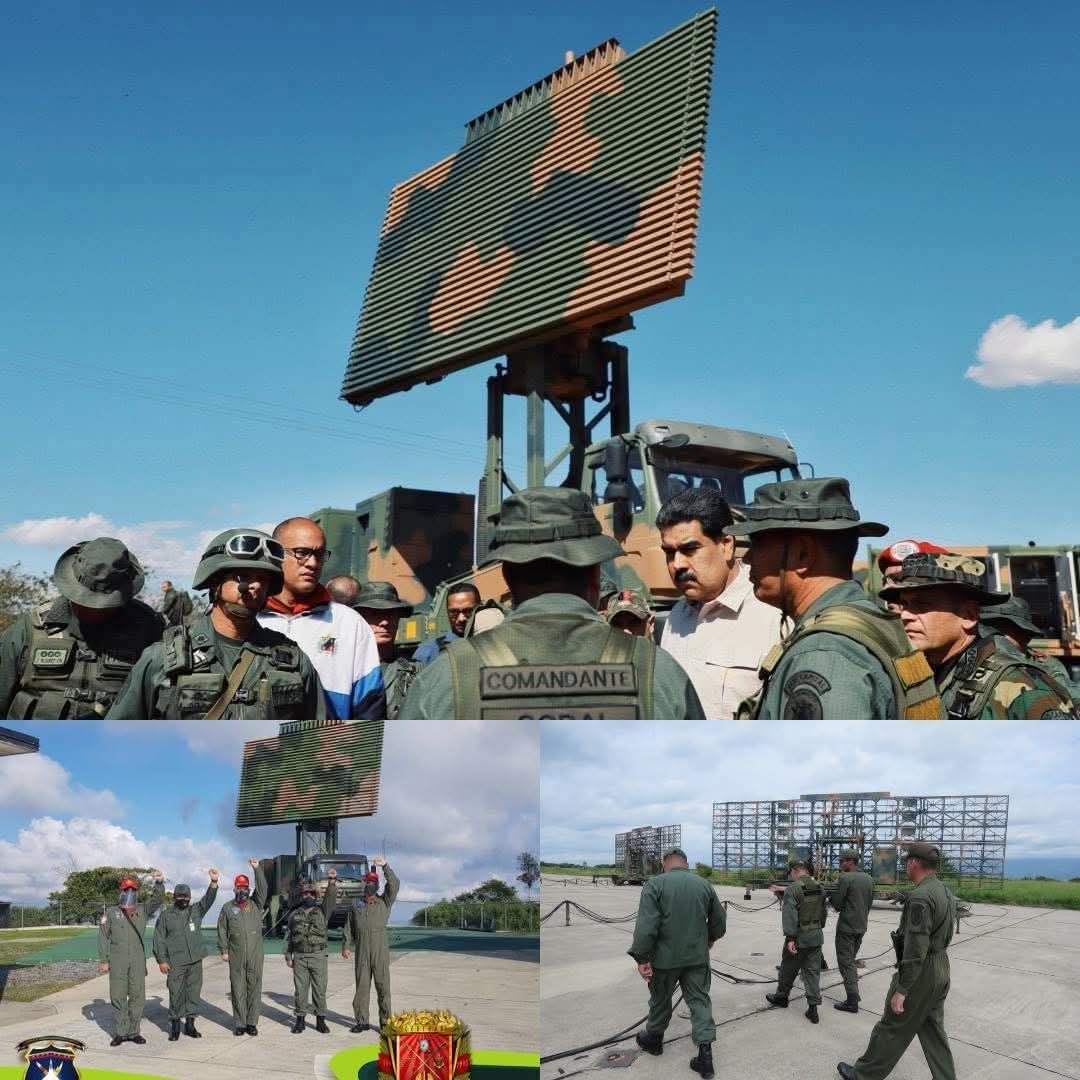
· The JYL-1: The Strategic Sentry. A long-range, three-dimensional air surveillance radar, the JYL-1 is the wide-eyed lookout of the system. Mounted on a massive fixed antenna array, its purported range exceeds 300 kilometers, designed to provide the early-warning “big picture” of the aerial battlespace, tracking conventional aircraft at great distances and feeding data to command centres.
· The JY-27: The “Stealth Hunter”. This is the system at the heart of the controversy. Marketed extensively by China as a “counter-stealth” Very High Frequency (VHF) radar, the JY-27 operates on a lower frequency band. The science is well-understood: while harder to precision-track, VHF waves are less effectively absorbed or deflected by the angular shapes and radar-absorbent materials of stealth aircraft like the F-35, F-22, or J-20. Its inclusion was a clear statement: Venezuela sought to negate the West’s premier tactical advantage.
· The JY-11B: The Mobile Tactician. A highly mobile, S-band medium-range surveillance and acquisition radar, the JY-11B’s role is to provide the “fine brushstroke” detail. It is designed to be deployed rapidly, gather precise targeting-quality data on threats initially detected by the larger radars, and guide surface-to-air missile (SAM) systems like the Russian-made S-300VM (also in Venezuela’s arsenal) or Chinese HQ-9s to their targets.
On paper, this combination forms a formidable, multi-layered web. In theory, the JY-27 would cue the JYL-1 and JY-11B onto faint stealth signatures, which would then refine the track for engagement. This narrative has been a cornerstone of Chinese defence marketing and a point of reassurance for client states wary of American air dominance.
The Spear: The F-35 Lightning II:
Opposing this shield is the F-35, a fifth-generation fighter that is less an aircraft and more a flying supercomputer. Its stealth is not merely a coating but a holistic design philosophy encompassing its faceted shape, advanced composite materials, and internal weapon bays. Its sensor suite, the AN/APG-81 Active Electronically Scanned Array (AESA) radar, is phenomenally powerful but was likely kept in a passive, listening mode for this mission. The aircraft’s true strength lies in its role as a “quarterback in the sky” – a node in a vast network, capable of fusing intelligence from satellites, airborne early warning planes like the E-3 Sentry or E-2D Hawkeye, and cyber/electronic intelligence platforms to build a comprehensive real-time picture of enemy defences without emitting a single betraying signal.
The Silent Penetration: A Multi-Faceted Failure:
How, then, did the F-35s slip through unchallenged? Analysis points not to a single failure, but a cascade of synergistic factors that exploited both technological and human-system vulnerabilities.
1. The Stealth Edge, Perfected. Officials suggest this mission represented a new pinnacle in stealth operational tactics. The F-35’s radar cross-section (RCS), already the size of a marble, was likely optimized with mission-specific panel configurations and coatings. However, stealth is not invisibility; it is about delay and degradation of detection. The key was ensuring that any faint return captured by the JY-27’s VHF waves remained below the threshold of being classified as a legitimate track amidst the ocean of natural clutter and electronic noise.
2. The Terrain as an Ally. Aviation experts point to the almost-certain use of “terrain masking” and nap-of-the-earth flying. Venezuela’s diverse geography—from the Andes in the west to the dense jungles of the Amazon and the Orinoco basin—provides ample opportunity for aircraft to fly low, using mountains and valleys to physically block line-of-sight from radar sites. While the JY-27’s VHF waves can bend over the horizon better than higher frequencies, this capability is limited. A skilled pilot, using detailed terrain data, can remain in these radar “shadows” for extended periods, only emerging in carefully calculated windows. This tactic severely negates the effectiveness of all radars, regardless of their frequency.
3. The Integration Gap: A Network That Wasn’t. This emerges as the most critical vulnerability. Defence analysts have long speculated that while China can export advanced hardware, seamlessly integrating diverse systems into a cohesive, automated “kill chain” is a far greater challenge. The JYL-1, JY-27, and JY-11B may not have been speaking the same digital language effectively. Data links, command and control software, and sensor fusion algorithms are often the most guarded secrets of any military. Without flawless integration, a faint blip on the JY-27 screen might never have been automatically correlated with a gap in the JYL-1’s coverage or passed swiftly to a JY-11B for confirmation. The system likely relied on human operators to connect dots that were, by design, almost imperceptible.
4. Operational and Human Factors. The state of Venezuelan military readiness cannot be overlooked. Years of economic collapse, hyperinflation, and brain drain have severely impacted maintenance, spare parts availability, and training. Were the radars operating at full power? Were the crews, likely working in difficult conditions, fully alert and trained to interpret ambiguous data on their screens? Were all sites operational, or were some offline for maintenance? Any such lapse would have created a seam in the coverage, eagerly exploited by the penetrating aircraft.
5. The Electronic Shadow War. While officials remain tight-lipped, the potential use of supporting electronic warfare (EW) is a near-certainty. Accompanying the F-35s, or operating from standoff platforms, could have been aircraft like the EA-18G Growler or RC-135 Rivet Joint. These could perform “electronic combat mapping” – passively listening to the exact frequencies and patterns of the Venezuelan radars – and, if needed, deploy sophisticated jamming. This wouldn’t be brute-force noise, but subtle “corruption” of returns, creating false targets or further burying the F-35’s faint signature in manipulated clutter. The F-35’s own onboard electronic warfare suite is also among the world’s most advanced, capable of localized, precise jamming.
Geopolitical Tremors: A Global Reckoning:
The implications of this event ripple far beyond the Caribbean.
· For Venezuela: This is a profound national security humiliation. It renders their most expensive strategic investments seemingly hollow and exposes the nation to potential precision strikes with impunity. It will force a desperate and cash-strapped regime to re-evaluate its defence posture, potentially seeking even more advanced technology or deeper integration with Russian or Iranian advisors, further fueling regional instability.
· For China: This is a direct blow to the credibility of its defence industrial complex. The JY-27 has been a flagship export, sold or promoted to countries like Pakistan, Iran, Syria, and others as a cost-effective counter to Western stealth. This real-world failure will trigger urgent questions in capitals worldwide. Beijing will face intense pressure from clients to provide upgrades, explanations, and potentially costly fixes. It may accelerate China’s own push for even more advanced sensor technology and integration solutions, but the reputational damage in a competitive global market is significant.
· For the U.S. and Allies: The operation serves as a powerful validation of the trillion-dollar investment in the F-35 program and fifth-generation warfare concepts. It provides irrefutable combat data to refine tactics against integrated air defence systems, data that is invaluable for potential contingencies in Eastern Europe, the South China Sea, or the Middle East. It reinforces American deterrence and provides a potent psychological tool.
· For the Global Balance of Power: The episode underscores that in modern warfare, the quality of network integration, software, and training is as important as the quality of individual hardware components. It suggests that exporting a “system of systems” is a challenge even major powers struggle with. Nations seeking to deny airspace to advanced adversaries may now need to invest even more heavily in complementary assets: dense networks of cheaper, dispersed sensors (including passive ones), advanced low-band radars with advanced processing, and a highly trained, well-motivated cadre of operators.
Official Silence and Expert Analysis:
Unsurprisingly, official channels have maintained a wall of silence. The U.S. Department of Defense declined to comment on “specific operational matters.” The Venezuelan Ministry of Defence issued a furious but generic statement denouncing “imperialist aggression” and asserting the “full readiness and capability” of its armed forces, without directly confirming or denying the incident. The Chinese Foreign Ministry, when pressed, stated that “China’s military exports meet international standards and the legitimate defence needs of sovereign states,” and urged “all parties to avoid actions that increase regional tensions.”
Independent experts, however, are parsing the revelations. Dr. Alexandra Vance, a senior fellow at the Aerospace Security Project, stated: “This isn’t necessarily that Chinese radar technology is ‘bad.’ It’s that defeating a networked stealth attack is an incredibly complex, holistic challenge. It requires perfect performance from every component in the chain, from the physics of the radar, to the software fusing the data, to the human making the shoot/no-shoot decision. The F-35, backed by the most advanced supporting ecosystem in the world, is engineered to find and exploit the weakest link in that chain.”
Colonel (Ret.) Miguel Sanchez, a former Venezuelan air defence officer now in exile, offered a grim internal perspective: “The equipment was always a political trophy, not an operational priority. Without constant training, proper maintenance, and systemic integration, you have expensive monuments, not a defence network. The generals knew this, but telling Maduro that his billion-dollar shield was full of holes was not a career-enhancing move.”
The Bottom Line:
The silent flight of the F-35s over Venezuela has delivered a message louder than any sonic boom. It has demonstrated that claims of “counter-stealth” capabilities, however marketed, must be subjected to the ruthless crucible of real-world, adversarial testing. For nations reliant on such imported systems for their ultimate security, the event is a urgent wake-up call: a radar on a brochure is not a radar on a battlefield. The race between stealth and detection has entered a new, more clandestine, and more software-defined phase, where victory goes not just to the side with the most advanced hardware, but to the one with the most seamlessly integrated and cunningly employed network. The skies, it appears, remain decidedly contested, and for some, far less secure than they had believed.