

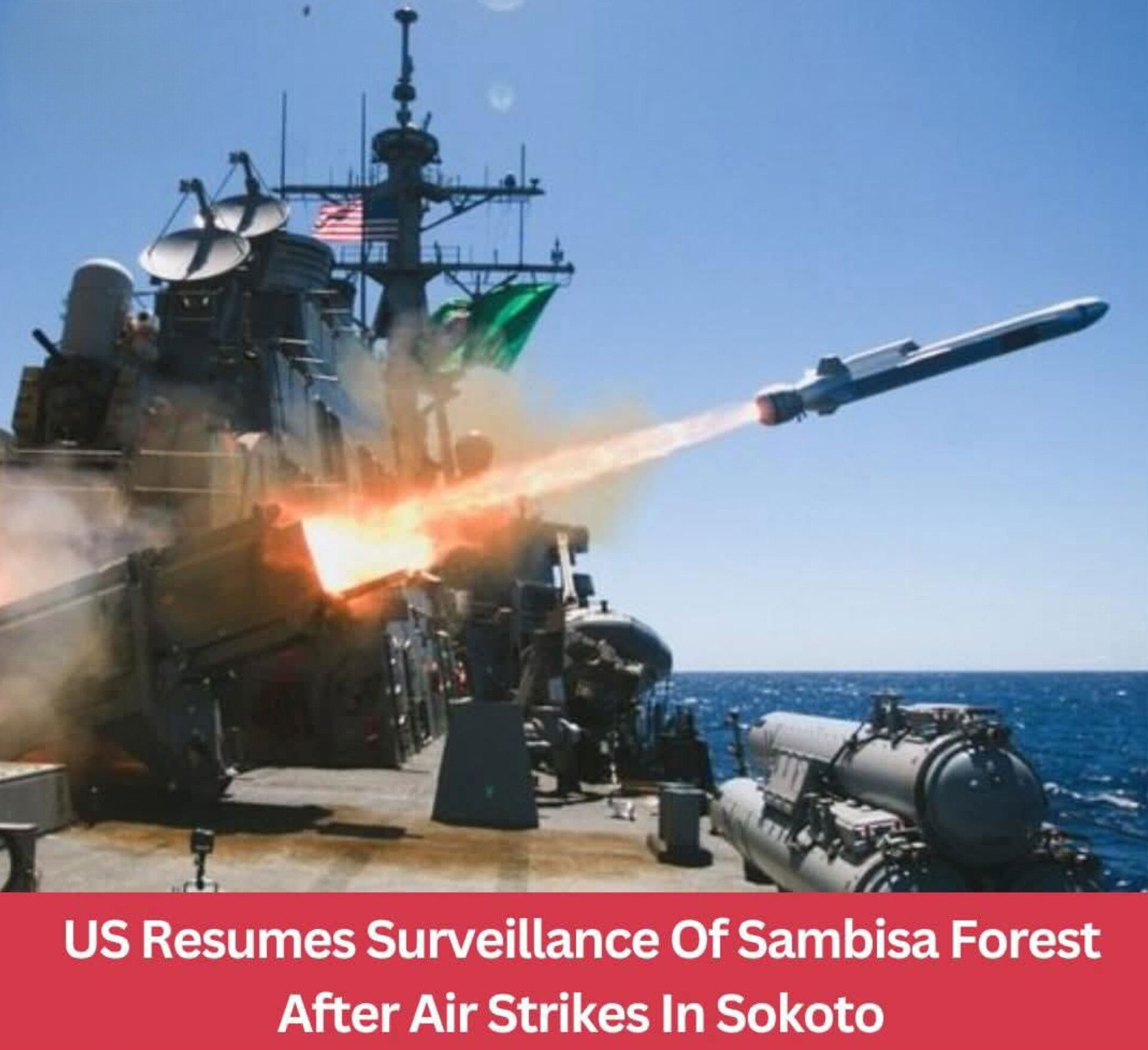
The Resumption of U.S. ISR Operations in Nigeria: A Strategic Pivot in the Lake Chad Basin
The geopolitical landscape of Nigeria’s conflict-ridden north-east has shifted palpably. Following decisive air strikes against ISIS-affiliated fighters in Sokoto State on Thursday night, the United States has officially resumed its intelligence, surveillance, and reconnaissance (ISR) operations over the region, with a renewed focus on militant strongholds within the vast and treacherous Sambisa Forest. This move is not merely a tactical adjustment but a significant strategic recalibration, signaling a deepened U.S. commitment to counter-terrorism in West Africa at a time when the region’s security architecture is under unprecedented strain.
For years, the Sambisa Forest, spanning parts of Borno State, has served as the notorious bastion of Boko Haram and, later, its more lethal offshoot, the Islamic State West Africa Province (ISWAP). Its dense foliage, difficult terrain, and hidden camp networks have made it a formidable sanctuary, frustrating both Nigerian ground forces and allied air campaigns. The temporary scaling back of U.S. ISR assets—a decision previously influenced by a complex mix of strategic re-prioritizations, diplomatic sensitivities, and operational reassessments—had left a critical gap in the persistent surveillance needed to track highly mobile insurgent cells. The resumption of these flights, likely utilizing platforms like the MQ-9 Reaper drones known for their long loiter times and sophisticated sensor suites, plugs this gap. It provides the Nigerian Armed Forces and multinational partners with the "eyes in the sky" essential for identifying leadership meetings, supply routes, and massing forces, thereby enabling more precise and effective kinetic actions.
The trigger for this re-engagement, the Sokoto air strikes, is itself a landmark event. Sokoto, a state in Nigeria’s far north-west, historically removed from the core theatre of the Boko Haram insurgency, represents a disturbing evolution. The presence and targeting of ISIS fighters there underscore a dangerous expansion and fragmentation of the threat. Militant groups are demonstrating increased ambition, seeking to establish footholds beyond their traditional areas of operation, possibly to open new fronts, secure alternative smuggling corridors, or test the defenses of less-hardened regions. The successful strike in Sokoto demonstrated a capability and a willingness to act on high-value intelligence. However, it also highlighted the insufficiency of sporadic engagements; without continuous, wide-area surveillance, such groups can easily disperse, reconstitute, and strike elsewhere. The resumption of ISR over the north-east, therefore, is a direct response to this expanding battlefield, aiming to contain the core insurgency in Sambisa while preventing the metastasis of violence into other vulnerable regions.
This development must be understood within the broader context of a deteriorating security situation across the Sahel. The recent withdrawal of French forces from Mali, the increasing influence of the Russian Wagner Group in the region, and the continued deadlock of the Multinational Joint Task Force (MNJTF) have created a power vacuum and a sense of urgency. The United States, while reducing its footprint in some areas, appears to be adopting a more targeted, intelligence-driven approach in Nigeria, a key regional anchor state. Sustained ISR is the cornerstone of such a strategy. It allows for a lighter footprint than large-scale troop deployments, minimizing local political blowback while maintaining decisive influence over the counter-terrorism ecosystem. The intelligence gathered does not just guide U.S. or Nigerian actions; it is shared through channels with other partners, potentially helping to coordinate the efforts of the MNJTF, which comprises troops from Niger, Chad, and Cameroon.
However, the path forward is fraught with enduring challenges and fresh dilemmas. The Nigerian military, despite gains in recent years, continues to grapple with issues of capacity, coordination, and, critically, the trust of local populations. ISR provides targeting data, but it cannot address the root causes of the insurgency: poverty, governance failures, and communal grievances. There is a perpetual risk that an over-reliance on high-tech surveillance and aerial bombardment could exacerbate civilian casualties and alienation if not paired with rigorous precautions and accountability. The Sokoto strike and the resumed flights will inevitably be scrutinized for their adherence to international humanitarian law and their long-term effectiveness in degrading militant capabilities rather than merely displacing them.
Furthermore, the diplomatic nuances are delicate. The Nigerian government has historically been sensitive to perceived infringements on its sovereignty. The public announcement of resumed U.S. ISR operations indicates a close, albeit carefully managed, coordination between Abuja and Washington. This partnership walks a fine line: Nigeria needs the technical support to confront an existential threat, while the U.S. seeks a stable partner in a volatile region without being drawn into a quagmire. The success of this renewed cooperation will depend on transparent communication, shared strategic objectives, and a complementary focus on humanitarian and development initiatives in the devastated region.
In conclusion, the resumption of U.S. ISR flights over Nigeria’s Sambisa Forest, catalyzed by the strikes in Sokoto, marks a pivotal moment in the long-running conflict. It represents a strategic decision to apply sustained, high-end intelligence capabilities against the heart of the insurgency while responding to its alarming geographical spread. This move strengthens the tactical hand of Nigerian forces and reaffirms the U.S. role as a key security partner. Yet, it also raises familiar questions about the limits of remote warfare and the unresolved political and social crises that fuel the conflict. The drones over Sambisa offer a clearer picture of the battlefield, but the ultimate victory will depend on what is built on the ground—in terms of security, governance, and hope—long after the surveillance platforms have departed the skies.