

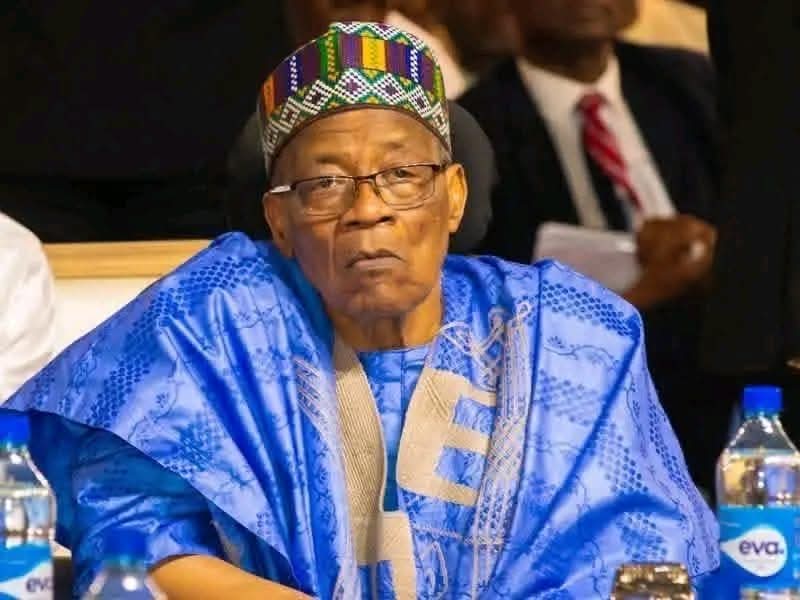
A Veteran’s Call to Arms: IBB Urges Government to Press On, Reject Bandit Surrender Talks
In a striking intervention that has set social media ablaze, former Military President, General Ibrahim Badamasi Babangida (IBB), has weighed in on Nigeria’s protracted security challenges with a firm and unambiguous message: the time for negotiation is after victory, not before.
Taking to his verified X (formerly Twitter) account this past weekend, the elder statesman advised the Federal Government to disregard any current appeals for surrender from bandits terrorizing communities across the nation. Instead, he called for a decisive and total military crackdown to first neutralize the threat.
“While the bandits are pleading for surrender, we must not accept their plea until every one of them is neutralised and eliminated,” Babangida stated emphatically in his post.
His position underscores a growing national debate about the most effective path to lasting peace. For Babangida, a former military leader familiar with the strategies of conflict, the sequence of events is crucial. He argues that accepting surrender prematurely could potentially undermine the momentum of security forces and allow criminal structures to remain intact, only to resurge later.
“The bandits must first be completely dealt with,” he insisted, urging security agencies to prioritize a full military response. He expanded on this, suggesting that only after such an objective is achieved should the government engage with what he termed “negotiators and sympathisers,” naming prominent Islamic cleric Sheikh Ahmad Gumi among others, for what he called “thorough questioning” by authorities.
A Nation Reacts: Social Media Echoes with Diverse Voices:
As is often the case in our vibrant digital public square, Babangida’s comments triggered an immediate and passionate wave of reactions. The post became a lightning rod, reflecting the deep divisions and frustrations felt by many Nigerians regarding the security crisis.
Many users voiced strong agreement with the former leader’s hardline stance. User @DrJay_NG commented, “IBB has spoken the bitter truth. Those seen as sympathizers should have been invited by security agencies long before now.” Another, @IkechukwuUpdates, described the advice as “timely” and stressed the need for strict implementation to achieve lasting security.
However, other voices offered more cautious or critical perspectives. Some questioned the practicality of a purely military solution, pointing to the complex roots of banditry in economic disenfranchisement and governance failures. User @Phyno_Reflects offered a meta-commentary on the fickle nature of public opinion, noting, “Nigerians can change their minds overnight. Today we hail a stance; tomorrow we might condemn the same proponent. We must be steadfast in our principles.”
This spectrum of responses highlights the difficult tightrope the government walks: balancing forceful action with dialogue, immediate security with long-term reconciliation.
The Bigger Picture: A Debate Renewed:
Babangida’s intervention does not occur in a vacuum. It comes at a time when communities in the Northwest and Northcentral regions are enduring relentless attacks, with kidnappings for ransom becoming a horrifically common occurrence. The debate over whether to negotiate with armed groups or pursue an uncompromising military campaign is one of the most pressing questions of our time.
Proponents of dialogue, like Sheikh Gumi, argue that many bandits are driven into crime by neglect and poverty, and that a structured amnesty and rehabilitation program could dismantle these groups more sustainably. On the other side, many citizens and leaders, now echoed by Babangida, feel that years of violence have forfeited any right to negotiation, and that only demonstrated strength can restore the state’s authority and deter future criminals.
What Comes Next?
The former President’s words carry the weight of history and experience. Whether one agrees with his prescription or not, his voice adds significant volume to a critical national conversation. It places a direct question before our current leaders: In the face of escalating violence, does the path to peace run through an intensified battlefield, or through a negotiated table?
For now, the ball is in the court of the Federal Government and our security agencies. They must sift through these strong opinions, intelligence reports, and ground realities to chart a course that not only stops the bleeding but also heals the deep wounds inflicted on our national fabric.
One thing is clear, as noted by citizens online and off: the status quo is unbearable. The nation watches, waits, and hopes for a strategy that will finally bring back peace to our fields, roads, and homes.
What do you think? Is a total military crackdown the only way forward, or should surrender appeals be explored?