

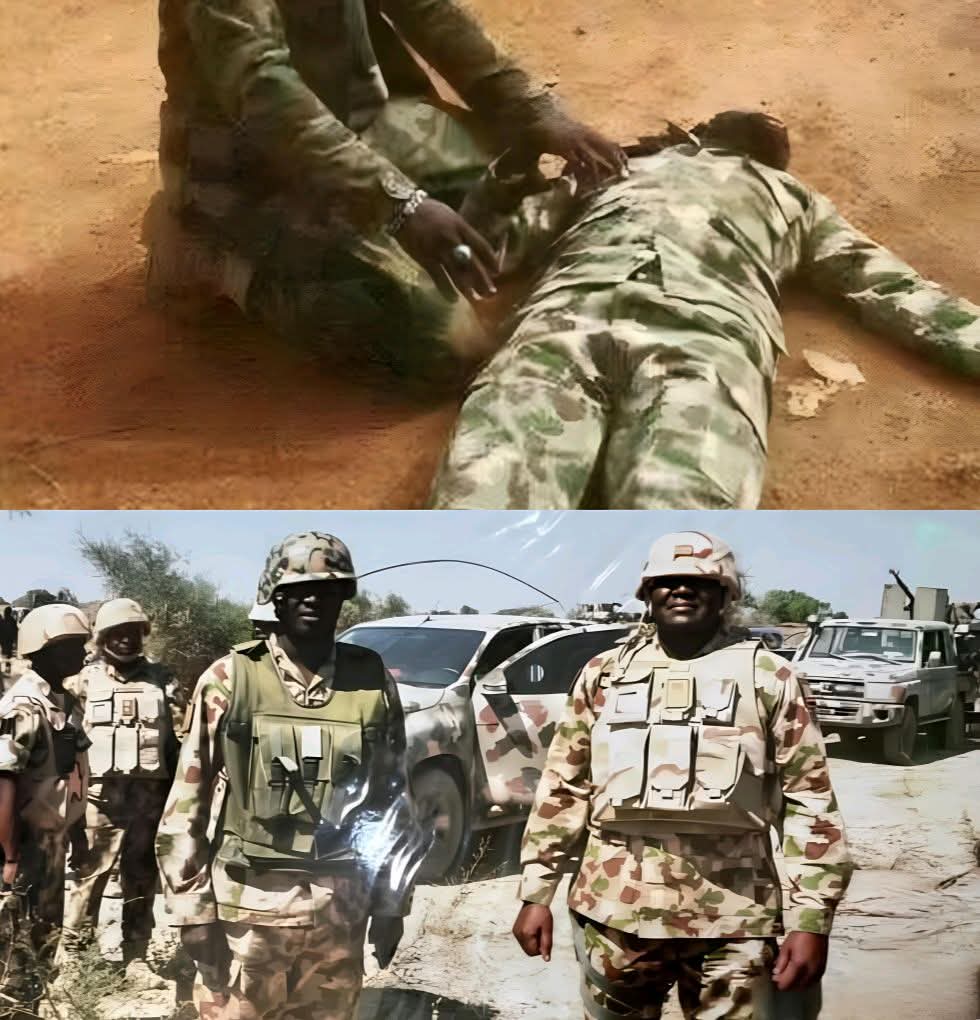
A LEADEN DAWN
The fragile dawn peace in a remote but strategic area of Borno State was shattered yesterday not by the rising sun, but by the thunderous detonation of improvised explosive devices (IEDs), followed by the ruthless crackle of insurgent gunfire. In a meticulously planned ambush bearing the grim hallmark of the Islamic State West Africa Province (ISWAP) faction, fighters of the notorious Boko Haram splinter group unleashed a devastating attack on a Nigerian Army patrol unit. The brutal assault claimed the lives of at least nine valiant soldiers and left a significant number of others with injuries of varying severity, according to multiple security sources and local vigilante officials who spoke to this newspaper on condition of anonymity due to the sensitivity of the operation.
The attack, which occurred in the vicinity of Molai, along the precarious Maiduguri-Damboa road, underscores a chilling and persistent reality: despite official pronouncements of degraded capabilities, the terror groups entrenched in the Lake Chad basin and the Sambisa Forest remain lethally potent, adaptive, and capable of striking military convoys with devastating effect. This incident represents one of the most significant single-day combat losses for the Nigerian military in the region in recent months, casting a long shadow over ongoing counter-insurgency operations and the broader security landscape in Nigeria’s beleaguered northeast.
THE ANATOMY OF AN AMBUSH:
Piecing together accounts from military insiders and civilian auxiliaries, a picture of a complex, multi-layered attack emerges. The army patrol, comprising vehicles from a unit tasked with securing the vital supply and link route, was traversing a stretch of road known for its vulnerability. The militants, having likely conducted detailed reconnaissance, initiated their assault with what is known in military parlance as a "Victim-Operated IED" – explosives buried in the road or concealed at the roadside, detonated by the pressure or proximity of the lead vehicle.
The initial blast was catastrophic, designed not just to destroy but to disorient and immobilize. It ripped through the convoy, crippling hardware and causing immediate casualties. As the stunned survivors scrambled to respond and evacuate the wounded, the second phase of the ambush was triggered. Heavily armed ISWAP fighters, who had lain in wait in concealed positions flanking the road, opened up with a sustained barrage of fire from rocket-propelled grenades (RPGs) and machine guns. This "kill-zone" tactic, a brutal staple of asymmetric warfare, sought to maximize chaos and casualties, preventing an orderly defense or retreat.
"The explosions were so huge, we felt the vibrations miles away," recounted Musa Idris, a trader from a nearby settlement who declined to give his exact location for fear of reprisals. "Then the gunfire started, it was continuous, like a heavy rain on a zinc roof. It went on for maybe thirty minutes. We all knew something very bad had happened to the soldiers. Everyone hid inside, no one dared to look."
The troops, though caught in a deadly trap, are reported to have fought back ferociously. A fierce firefight ensued, allowing some units to establish a defensive perimeter and call for urgent reinforcement. The arrival of air support from the Nigerian Air Force’s Alpha Jets and ground troops from a nearby Forward Operating Base (FOB) is believed to have forced the attackers to break contact and melt back into the surrounding savannah and forest. The aerial assets provided top cover and pursued the fleeing militants, though the extent of enemy casualties remains unconfirmed.
THE AFTERMATH: SILENCE AND SMOKE:
In the grim silence that followed the insurgents’ retreat, the full scope of the tragedy became apparent. The scene was one of carnage: a smoldering vehicle husk, scorched earth, and the urgent, harrowing efforts of medics to triage and evacuate the wounded. The bodies of the nine fallen soldiers were recovered, their names withheld pending notification of their next of kin. The injured were swiftly transported by air and road to the 7 Division Military Hospital in Maiduguri and other medical facilities. Sources within the medical corps describe a frantic but professional response, with surgeons working through the night to treat shrapnel wounds, blast injuries, and gunshot trauma.
The military high command, through a terse statement from the Director of Defence Media Operations, acknowledged the attack but provided scant detail, stating only that troops had "encountered an IED and ambush" and suffered "some casualties," while inflicting "heavy losses" on the terrorists. This boilerplate response, a familiar feature of the conflict’s communication strategy, stands in stark contrast to the granular and painful details circulating within security and local circles. The lack of immediate, transparent official accounting, critics argue, fosters a climate of rumor and erodes public trust.
A PATTERN OF PERSISTENT THREAT:
Yesterday’s ambush is not an isolated event but a stark data point in a dangerous and evolving trend. The Maiduguri-Damboa road, a critical artery for the movement of goods, people, and military logistics, has been a perennial flashpoint. While the Nigerian Army has established "super camps" and fortified major towns, the vast, unpaved networks linking them remain perilously contested. ISWAP, in particular, has refined its tactics over the years. It has moved from holding fixed territory to a model of highly mobile, intelligence-driven guerrilla warfare, focusing on soft targets, humanitarian convoys, and military patrols.
Their expertise in IED fabrication and deployment has become a signature threat. These devices, often constructed from scavenged military munitions, fertilizer, and remote-control components, are cheap, psychologically terrifying, and militarily effective. They act as force multipliers, allowing a small band of insurgents to engage a superior force on punishing terms. The Molai ambush demonstrates a continued ability to gather precise tactical intelligence—likely through networks of informants or covert observation—and to execute coordinated, combined-arms assaults.
Furthermore, this attack occurs within a complex geopolitical context. The Lake Chad region is a mosaic of intersecting conflicts, with the Nigerian military engaged not only against Boko Haram and ISWAP but also against rising criminal militancy in the Northwest and a secessionist insurgency in the Southeast. This strain on resources and attention is a constant challenge. Simultaneously, the Multinational Joint Task Force (MNJTF), comprising troops from Niger, Chad, Cameroon, and Nigeria, has seen successes but struggles with coordination and the fluid cross-border movement of militants.
THE HUMAN TOLL BEYOND THE BATTLEFIELD:
Each soldier lost is a universe of grief. Behind the stark number "nine" are nine families plunged into inconsolable mourning; nine stories of service and sacrifice cut short. The wounded, whose numbers remain fluid, face not only physical recovery—which, for amputees and those with severe head trauma, will be lifelong—but also the invisible scars of post-traumatic stress. The military community, a tight-knit brotherhood, feels each loss acutely, a blow to morale that resonates through barracks and bases.
For the civilian population of Borno, the attack is a grim reminder of a war that has displaced over two million people and claimed tens of thousands of lives since 2009. The promise of a return to normalcy, of reopening roads and farms, is repeatedly undermined by such violence. "We hear the government say they have defeated them, but the bombs keep speaking a different language," said Falmata Usman, an internally displaced person living in Maiduguri’s Dalori Camp. "How can we go back to our villages when even the soldiers are not safe on the roads?"
Humanitarian operations, already constrained by funding shortfalls and security protocols, face renewed scrutiny. The targeting of a military convoy on a key road will inevitably lead to further restrictions on movement for aid agencies, delaying life-saving assistance to populations in hard-to-reach areas. The conflict’s enduring legacy is one of profound disruption—of livelihoods, education, and any semblance of predictable life.
EXPERT ANALYSIS: A WAR OF ADAPTATION:
Security analysts view the Molai ambush as a clear indicator of the insurgency’s adaptive resilience. "This is classic ISWAP 2.0," explains Dr. Ibrahim Haruna, a security studies lecturer at the University of Maiduguri. "They are no longer the rag-tag force of a decade ago. They are tactically disciplined, financially resourced through smuggling and taxation, and strategically patient. They pick the time, place, and method of engagement to maximize psychological impact and demonstrate that the state cannot protect even its own."
He and other experts point to several concerning implications. First, the attack highlights a potential intelligence failure or a lapse in route clearance procedures. Second, it suggests that insurgent cells retain freedom of movement and the initiative in certain corridors. Third, and perhaps most critically, it may signal a deliberate campaign to test the limits of the military’s new "super camp" strategy, drawing reactions and probing for weaknesses.
The response from the Nigerian security apparatus, analysts argue, must now evolve beyond kinetic operations. It requires a significant enhancement of human intelligence networks to penetrate insurgent cells, greater investment in technology for IED detection and route clearance, and a more agile, decentralized command structure that allows field commanders to respond swiftly to local threats. Crucially, a complementary non-kinetic strategy addressing the drivers of recruitment—poverty, lack of opportunity, and local grievances—remains urgently needed.
A NATION’S RESOLVE TESTED:
As the dust settles on the road to Molai, the nation is left to grapple with the sobering news. The President and Commander-in-Chief has been briefed and is expected to issue a statement, reiterating the government’s commitment to defeating terrorism. The Senate Committee on Army will likely call for an in-camera briefing from service chiefs. On social media, the hashtag #PrayForOurTroops will trend alongside angrier, more polarized discourse about security spending and strategy.
But in the barracks, the focus is immediate and raw: the somber ritual of packing the personal effects of the fallen, the visit to the wounded in hospital wards, and the meticulous planning of the next patrol. The soldiers of Operation Hadin Kai know that their enemy is watching, learning, and adapting. The war in the Northeast has long ceased to be about dramatic territorial conquests; it is now a grinding war of attrition, a daily test of wills fought on dusty roads under a relentless sun.
The nine soldiers who paid the ultimate price yesterday join a long and painful roll call of heroes from a conflict that has defined a generation. Their sacrifice is a stark testament to the price of national security and the unyielding courage of those who stand on the front lines. Yet, their loss also poses an urgent, unresolved question to the nation’s security leadership: In the face of an enemy that constantly reshapes itself, how must the response transform to finally secure not just the garrisons, but every inch of the land and every life of those sworn to protect it? The answer will determine whether the dawn in Borno will ever break in true, lasting peace.