

SUBHEADLINE: Precision Airstrikes Target Fleeing Insurgents Following Weekend Massacre of Over 40 Civilians; Defence Headquarters Vows Sustained Pressure
BYLINE: From our Defence Correspondent and Agencies
MINNA, NIGER STATE, JANUARY 6, 2026
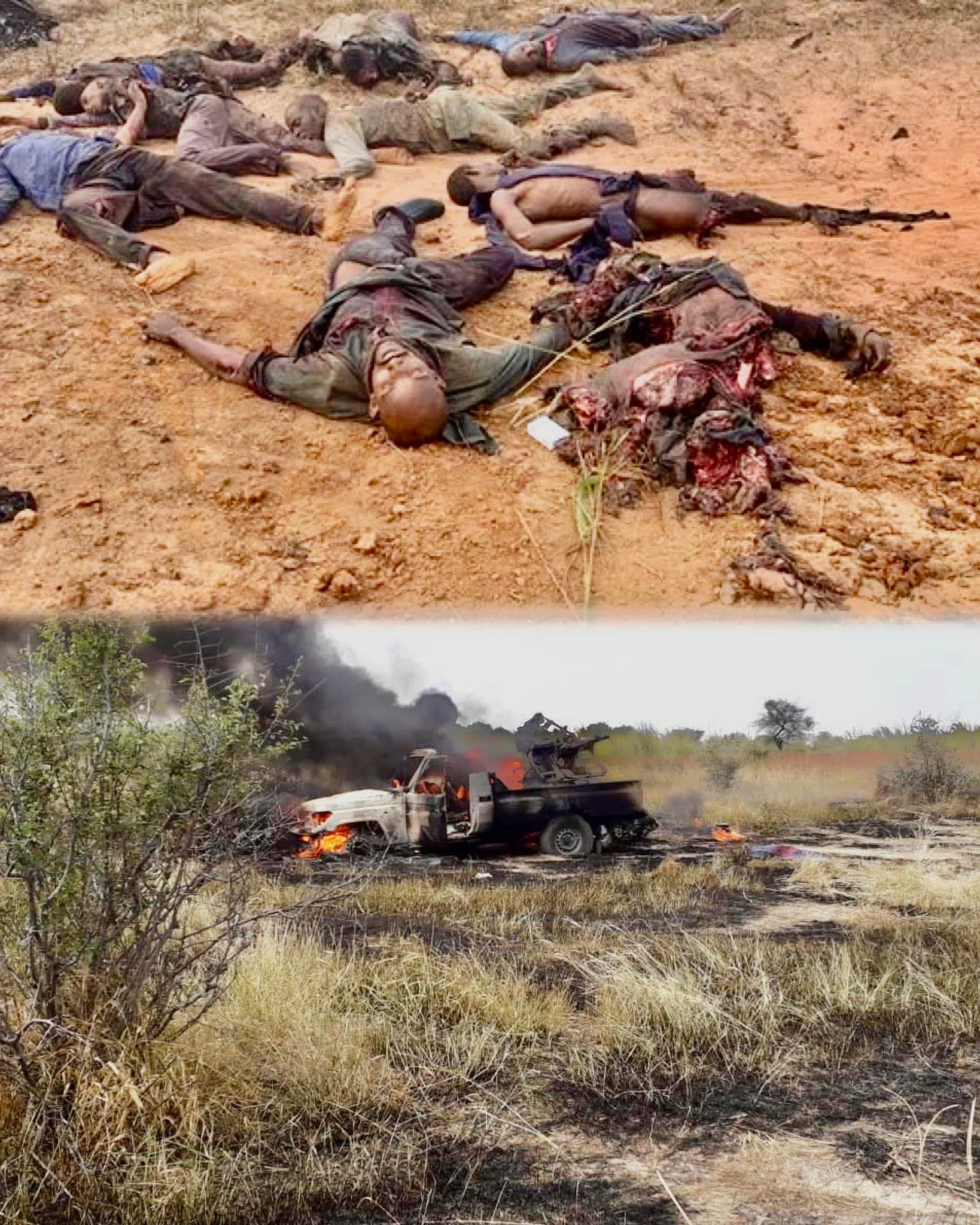
In a formidable and decisive response to a brutal weekend assault on civilian populations, the Nigerian Air Force (NAF) has executed a devastatingly effective counter-terrorism operation, killing an estimated 150 armed insurgents in the restive forests of Niger State. The precision airstrikes, authorised at the highest levels of the nation’s security apparatus, targeted a large contingent of terrorists as they attempted to flee their makeshift camp in the aftermath of the January 4th atrocities, which claimed the lives of more than 40 innocent villagers.
The operation, described by military insiders as "swift, clinical, and overwhelming," represents one of the single most lethal kinetic actions against terrorist elements in the region in recent years and marks a significant escalation in the armed forces’ campaign to reclaim vast ungoverned spaces in North-Central Nigeria.
Background: A Weekend of Bloodshed:
The trigger for this formidable military response was an event of chilling barbarity on the evening of Sunday, January 4, 2026. Communities in the Shiroro and Rafi local government areas of Niger State, long plagued by the predatory incursions of terrorist factions—often loosely termed "bandits" but operating with the tactics and ferocity of insurgent armies—came under coordinated attack.
Witness accounts, corroborated by local officials and humanitarian groups, depict a now-familiar horror: a large convoy of motorcycles, bearing armed men, descended upon unsuspecting villages. The assault was indiscriminate and merciless. Homes were set ablaze, food stores looted, and residents who could not flee were executed. Preliminary casualty figures, still being verified by the National Emergency Management Agency (NEMA), indicate a death toll exceeding 40, with scores more injured and a significant number of residents, particularly women and children, now missing and feared abducted.
The attacks sent a fresh wave of internal displacement, with hundreds of traumatised survivors flooding into already overcrowded camps in Minna and other urban centres. The January 4th massacre ignited a firestorm of public outrage, with civil society groups, traditional rulers, and state governors issuing impassioned pleas for the federal government to take more robust action. The political pressure on the Defence Headquarters (DHQ) and the presidency was immediate and immense.
The Intelligence Pivot and Kinetic Response:
According to a high-level briefing provided to this newspaper by Defence Headquarters, the period following the Sunday massacre was one of intense, round-the-clock activity. While condolence messages were issued and relief efforts mobilised, the core machinery of Nigeria’s military intelligence apparatus shifted into a higher gear.
"Immediately after the cowardly attack on our citizens, all relevant intelligence, surveillance, and reconnaissance (ISR) assets were re-tasked," explained a senior Air Force officer who spoke on condition of anonymity due to the sensitivity of operations. "This included satellite imagery, signals intelligence, and persistent drone surveillance over known corridors and suspected enclaves in the vast forest reserves bordering Kaduna, Zamfara, and Niger states."
The breakthrough came in the early hours of Tuesday, January 6. ISR platforms identified a significant concentration of armed men and motorcycles at a previously monitored camp deep within the Allawa-Izom forest corridor. Intelligence analysts, cross-referencing signals data with human intelligence from local sources, assessed with high confidence that this grouping contained the perpetrators of the January 4th raids, who were now regrouping and preparing to disperse to avoid anticipated retaliation.
"The pattern was clear," the officer continued. "They had returned to their sanctuary, likely to divide loot, treat their wounded, and plan their next move. They felt insulated by the terrain. Our assessment was that they would soon break into smaller, harder-to-target cells. The window for a decisive engagement was narrow."
Authorization from the Chief of Air Staff and the Chief of Defence Staff was secured within hours. The mission objective was unambiguous: to annihilate the terrorist formation before it could disperse.
“Boom 💥 !!!”: The Anatomy of an Airstrike:
As dawn broke on January 7, the terrorist camp was a hive of activity, unaware that high above, unseen eyes tracked every movement. The order to engage was given.
The lead element of the strike package consisted of NAF’s newer platforms, including the A-29 Super Tucano light attack aircraft, renowned for their precision and loitering capability. They were supported by armed unmanned aerial vehicles (UAVs) providing real-time footage and battle damage assessment. The aircraft, operating from a forward operating base within the region, closed in on the target coordinates.
Defence sources describe a scene of sudden, catastrophic violence for the insurgents. The first passes targeted the perimeter of the camp and logistics points—lines of parked motorcycles and ammunition dumps—to prevent a rapid escape and trigger secondary explosions. This created panic and chaos within the camp.
As the terrorists scrambled, attempting to flee on foot or salvage weaponry, subsequent strikes were called in on the converging routes and the main body of fighters. The munitions used, likely a mix of precision-guided bombs and air-to-ground rockets, saturated the area. The official communiqué from the Director of Defence Media Operations, released midday on January 7, was terse but potent: "In a well-coordinated air interdiction mission conducted this morning, air assets of the Nigerian Air Force engaged and neutralised a large congregation of terrorists at a confirmed location in Niger State. The location was active and housed over 150 combatants. The strike was successful and total. No civilian casualties were recorded in the operation."
The social media post from the NAF’s official handle, which simply read "Boom 💥 !!!" alongside footage of the strikes (blurred for operational security), became a viral symbol of the operation’s ferocity.
Strategic Implications and the Broader Conflict:
The successful strike carries significant weight beyond the immediate body count. Security analysts consulted for this report highlight several key implications:
1. A Shift to Proactive Engagement: The operation signals a potential doctrinal shift from reactive to proactive and predictive strikes. "This wasn't just a retaliation; it was a pre-emption based on sophisticated tracking," notes Dr. Chidi Mbah, a security studies professor at the University of Abuja. "They didn't wait for the next attack. They followed the trail from the crime scene to the perpetrator's hideout and acted before the next crime could be planned. This is the model needed for success."
2. Intelligence-Led Warfare: The operation underscores the growing capability and integration of Nigeria’s military intelligence. The seamless flow from signals intercepts and human intelligence to satellite tasking and drone surveillance, culminating in a kinetic strike, represents the maturation of a process that has often been criticised for being slow and disjointed.
3. Morale and Messaging: The strike serves as a massive boost for the morale of both the armed forces and terrorised communities. For the troops, it is a vindication of training and investment. For civilians, it is a rare, tangible sign of protection and retribution. Conversely, for the terrorist groups, it is a stark message about the vulnerability of their sanctuaries.
4. The Challenge of Sustenance: The critical question now, experts warn, is sustainability. "This is a tremendous tactical victory," warns retired Brigadier-General Abdul Usman. "But the strategic victory lies in holding the space, preventing regeneration, and addressing the root causes—governance vacuums, poverty, and the complex economics of kidnapping. One spectacular strike does not end an insurgency, but a series of them can cripple it."
Civilian Reaction and Humanitarian Concerns:
In the displacement camps of Minna, news of the airstrikes was met with a complex mixture of jubilation, relief, and lingering sorrow. "They have avenged our people," stated Mama Aisha, who lost two sons in the January 4 attack. "It does not bring back my children, but it tells these evil men that there is a price to pay. Let them continue until not one of them is left."
Local traditional leaders and the Niger State government have issued statements commending the military’s action. The Governor, in a broadcast, stated, "While we mourn our irreplaceable losses, we commend the precision and resolve shown by our Air Force. This is the kind of assertive action we have been advocating for. We urge them to maintain this momentum."
Humanitarian organizations, while acknowledging the military necessity, have reiterated calls for strict adherence to rules of engagement to prevent civilian casualties in future operations. They also highlight the worsening displacement crisis, urging increased government and international support for the thousands now dependent on aid.
Official Statements and the Road Ahead:
At a press conference in Abuja, the Defence spokesperson presented a more detailed account, displaying declassified before-and-after aerial imagery of the camp. "These individuals were not civilians. They were armed combatants, confirmed through multiple intelligence streams to have been involved in the recent atrocities and in planning further attacks. This operation has severely degraded their capabilities in this axis."
The Chief of Air Staff, in a separate statement, vowed that the operation was "a template for the future." He added, "We will continue to refine our processes, employ technology, and pursue these enemies of the state relentlessly. There will be no safe haven."
The January 7th airstrikes in Niger State stand as a watershed moment in Nigeria’s long-running battle against domestic terrorism. They demonstrate a potent, technologically advanced capability within the armed forces. The elimination of 150 fighters in one engagement is a severe blow to the operational capacity and morale of terrorist groups in the region. However, as the smoke clears over the forest camp, the fundamental challenges remain: securing liberated communities, dismantling the criminal networks that sustain the insurgency, and healing a deeply traumatised society. The nation now watches to see if this "boom" is a one-off thunderclap or the sustained drumbeat of a decisive and ultimately victorious campaign.