

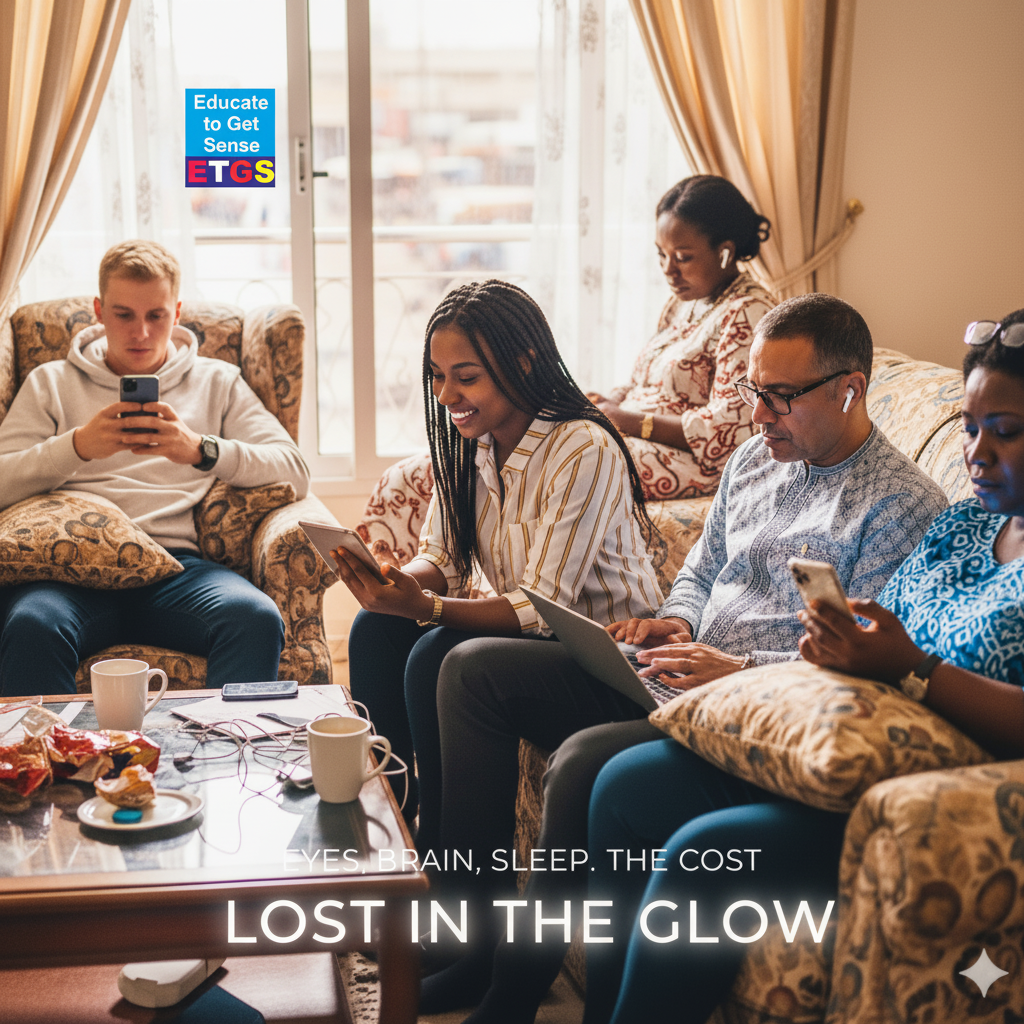
Let’s be honest: your phone is probably within arm’s reach right now. It’s our portal to the world—our connection to friends, family, work, entertainment, and the sum of human knowledge. It’s a miraculous tool. But here’s the gentle, crucial truth we all need to hear: that constant companionship comes at a cost to our most vital assets—our eyes, our brain, and our sleep.
This isn’t about inducing guilt or demanding a digital detox you won’t sustain. It’s a friendly, motivated look at what’s really happening when we lose ourselves in the glow, and more importantly, how we can build a healthier, more balanced relationship with our devices. Think of this as a empowering conversation, a nudge towards awareness that can help you feel more energized, focused, and rested.
Part 1: The Strain on Your Windows to the World: Your Eyes:
Our eyes are evolutionary marvels, designed for gazing at horizons, tracking movement in nature, and shifting focus between various distances. They were not built for hours of staring at a small, brightly lit screen held just a foot from our face.
1. Digital Eye Strain (Computer Vision Syndrome): This is the umbrella term for the discomfort felt after prolonged screen use. Symptoms include:
· Dry, irritated eyes: We blink about 15-20 times per minute normally, but studies show this rate halves when we’re staring at a screen. Less blinking means tears evaporate faster, leading to that gritty, tired feeling.
· Blurred vision: Your eye’s focusing muscle (the ciliary muscle) is stuck in a constant state of contraction to keep the close-up screen in focus. After a while, it gets fatigued and struggles to adjust, causing temporary blurriness.
· Headaches: This eye muscle fatigue often radiates into tension headaches, centered around the temples and forehead.
· Neck and shoulder pain: It’s all connected! That hunched-over, chin-tucked “text neck” posture puts immense strain on your cervical spine.
2. The Blue Light Question: This is where a lot of the conversation lives. Smartphone screens emit significant amounts of high-energy visible (HEV) blue light. While natural blue light from the sun is crucial for regulating our circadian rhythm, the concentrated, close-range dose from our phones is a different story.
· The Retina: Some long-term studies suggest that chronic, intense exposure to blue light could contribute to photochemical damage to retinal cells, potentially increasing the risk of conditions like age-related macular degeneration later in life. The science is still evolving, but it gives us reason to practice caution.
· The Immediate Impact: More immediately, blue light is notorious for its glare and visual scatter, which can contribute to eye strain and difficulty focusing.
Your Motivated Action Plan for Eye Health:
· The 20-20-20 Rule: This is your new best friend. Every 20 minutes, look at something 20 feet away for at least 20 seconds. It forces your focusing muscles to relax. Set a gentle alarm if you need to!
· Mindful Blinking: Consciously practice full, deliberate blinks when reading or scrolling. It rehydrates the eyes.
· Optimize Your Setup: Increase text size so you don’t squint. Ensure your screen brightness matches the ambient light around you—it shouldn’t feel like a flashlight. Use a matte screen protector to reduce glare.
· Embrace Distance: Hold your phone farther away—ideally at least 16 inches from your face. Use the zoom function instead of bringing it closer.
· Consider Blue Light Filters: Use the built-in “Night Shift” (iOS) or “Night Mode” (Android) settings not just at night, but during the day for long browsing sessions. Blue light-blocking glasses can also be a helpful tool for many.
Part 2: The Mind at Scroll-Speed: Your Brain on Phones:
If our eyes are the physical gateway, our brain is the central processing unit being flooded with data. The way smartphones deliver information—in quick, unpredictable, dopamine-driven bursts—is fundamentally reshaping our cognitive landscape.
1. The Dopamine Loop & Attention Fragmentation: Every notification, like, or new piece of content is a potential reward. Our brains release a little shot of dopamine, the “feel-good” neurotransmitter associated with seeking and reward. This creates a powerful reinforcement loop: pick up phone -> check -> get reward -> repeat. The problem? This conditions our brain for interruption, not sustained attention. We become “addicted” to the novel and the new, making it profoundly difficult to engage in deep, focused work, reading, or conversation that doesn’t offer the same rapid-fire rewards. Our attention span becomes fragmented, flitting from one thing to the next.
2. The Myth of Multitasking: Your phone makes you feel like a master multitasker—juggling messages, emails, and news. But neuroscience is clear: the brain doesn’t truly multitask; it task-switches. Every time you shift from writing an email to checking a notification, there’s a cognitive “switching cost.” You use up mental energy and increase the likelihood of errors. This constant partial attention leaves us feeling mentally drained and less productive, even though we feel busy.
3. Memory and Cognitive Load: When we know information is instantly accessible online (the “Google effect”), we’re less likely to encode it into our long-term memory. Why remember a fact when your phone can? This can atrophy our natural memory muscles. Furthermore, the sheer volume of information and decisions (What should I watch? Who posted? What’s the news?) creates a high cognitive load, leading to mental fatigue and decision paralysis.
4. Social Comparison and Anxiety: Social media, a primary phone activity, is often a highlight reel. Constant exposure can fuel social comparison, eroding self-esteem and fostering feelings of inadequacy, anxiety, and even loneliness. The brain’s threat centers can be activated by perceived social exclusion (e.g., not being tagged, seeing others hang out without you), creating low-grade stress.
Your Motivated Action Plan for Brain Health:
· Create Phone-Free Zones and Times: Designate the first 30 minutes of your morning and the last hour before bed as sacred, screen-free periods. Make meals and in-person conversations phone-free zones.
· Batch Your Checking: Instead of checking notifications 100 times a day, schedule 3-4 specific times to process emails and messages. Turn off non-essential notifications! This reclaims your attention and breaks the dopamine loop.
· Practice Mono-Tasking: Dedicate blocks of time to single tasks. Use a timer for 25-50 minutes of focused work (the Pomodoro Technique), with your phone in another room. Feel the satisfaction of deep, uninterrupted engagement.
· Curate Your Feed Actively: Unfollow accounts that make you feel anxious or less-than. Follow those that inspire, educate, and bring joy. You are the architect of your digital environment.
· Embrace Boredom: Allow yourself moments of undirected thought. On a walk, waiting in line, resist the urge to pull out the phone. Let your mind wander, problem-solve, and create. This is where creativity often sparks.
Part 3: The Nighttime Thief: Your Sleep Under Siege:
This is perhaps the most profound and well-documented impact of excessive phone use, especially before bed. Stealing your sleep is stealing your foundation for physical health, mental clarity, and emotional resilience.
1. Circadian Rhythm Disruption: As mentioned, blue light is the chief culprit here. When it hits photoreceptors in your eyes after dusk, it suppresses the production of melatonin, the hormone that signals to your body that it’s time to wind down and sleep. Melatonin is like a gentle conductor cueing the orchestra of sleep. Your phone essentially tricks your brain into thinking it’s still daytime, delaying sleep onset and disrupting the natural sleep-wake cycle.
2. Psychological Arousal: It’s not just the light. The content you consume is stimulating. A stressful work email, an exciting game, a heated social media debate, or even an engaging TV show activates your mind and nervous system. This cognitive and emotional arousal is the polar opposite of the calm, quiet state needed to drift into sleep.
3. Fragmenting Your Wind-Down Routine: The pre-sleep period should be a gradual descent. Replacing calming rituals like reading a physical book, light stretching, or conversation with screen time is like slamming the brakes at the top of a hill instead of coasting down.
The Ripple Effect of Poor Sleep:
A night of poor sleep isn’t just about feeling groggy.It creates a vicious cycle:
· Increased Irritability & Stress: Sleep deprivation amplifies the brain’s amygdala (emotional center) response, making you more reactive.
· Reduced Cognitive Function: Memory consolidation, learning, and decision-making all happen during sleep. Without it, your focus, creativity, and productivity from the previous day’s brain plan suffer.
· Cravings & Metabolism: Poor sleep disrupts hormones that regulate hunger (ghrelin and leptin), often leading to increased cravings for sugary, high-carb foods.
· Weakened Immunity: Sleep is when your body repairs itself. Chronic poor sleep leaves you more vulnerable to illness.
Your Motivated Action Plan for Sleep Sanctuary:
· Establish a Digital Sunset: Commit to powering down all screens 60-90 minutes before your target bedtime. This is non-negotiable for sleep hygiene. Use an old-fashioned alarm clock to avoid the phone-in-bedroom temptation.
· Embrace “Night Mode” Early: If you must use a device in the evening, enable the warm-toned blue light filter at least 2-3 hours before bed. While it helps, it doesn’t eliminate the arousal from content.
· Create a Charging Station Outside the Bedroom: Make your bedroom a sanctuary for sleep and intimacy only. The simple act of getting out of bed to turn off an alarm can help you start the day more intentionally.
· Replace with Rituals: Fill the pre-bed void with calming activities. Try reading a physical book under soft light, listening to a podcast or calming music (from a non-phone device if possible), practicing gentle yoga or meditation, or journaling.
· Mind Your Mornings: Resist the urge to check your phone immediately upon waking. Give yourself time to set your own tone for the day—stretch, hydrate, think about your intentions—before being bombarded by the world’s demands.
Weaving It All Together: A Holistic Approach to Digital Wellness:
The connection between eyes, brain, and sleep is intimate and powerful. Strained eyes from a day of scrolling contribute to headaches and fatigue, which stress the brain. A brain wired on dopamine and anxiety then struggles to power down at night. Poor sleep leads to tired, dry eyes and a foggy, irritable brain the next day, making you more likely to seek the easy distraction of your phone… and the cycle continues.
Breaking this cycle isn’t about rejection; it’s about intentional reclamation.
Start Small and Celebrate Wins: Don’t try to change everything at once. Maybe this week, you master the 20-20-20 rule. Next week, you implement a digital sunset. Small, consistent changes build lasting habits.
Audit Your Usage: Most phones now have detailed screen time reports. Look at them without judgment—just with curiosity. Where is your time truly going? Which apps leave you feeling energized, and which leave you feeling drained? Use this data to make informed choices.
Reconnect with the Analog World: Rediscover the deep satisfaction of activities that engage your senses fully: cooking a meal without a screen, walking in nature and truly observing, holding a conversation with full eye contact, getting lost in a physical book.
Practice Self-Compassion: You will have days where you scroll mindlessly for hours. That’s okay. This is not about perfection; it’s about awareness and gentle course-correction. The goal is progress, not purity.
Your phone is a tool of incredible potential. By understanding its effects on your biology and psychology, you empower yourself to use it wisely—to enhance your life without letting it diminish your vitality. You have the power to protect your sparkling eyes, to nurture your brilliant, focused brain, and to claim your restful, rejuvenating sleep.
So, take a deep breath. Maybe even put this down for a moment, look out the window, and let your eyes relax. Your future, well-rested, clear-eyed, and focused self will thank you. Let’s start today.