

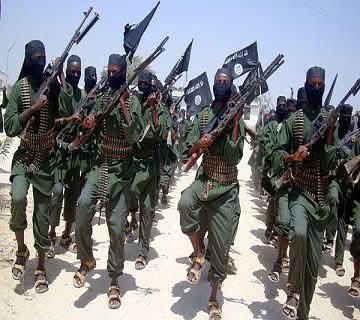
In a significant and detailed update on the protracted counter-insurgency operations in northeastern Nigeria, the Defence Headquarters (DHQ) recently announced the results of a relentless seven-month campaign. From late 2023 into mid-2024, Nigerian ground and air forces operating under the auspices of Operation Hadin Kai have reportedly neutralized 438 fighters affiliated with the jihadist groups Boko Haram and the Islamic State West Africa Province (ISWAP). Perhaps as crucially, troops seized approximately 300 communication devices, a haul that represents a strategic blow beyond mere body counts. This announcement is not merely a statistical report; it is a window into the evolving nature of Nigeria’s fight against an insurgency now in its second decade, highlighting both hard-earned tactical gains and the enduring complexities of the conflict.
The figure of 438 militants killed underscores the intensity of recent ground and aerial engagements. Military spokespersons detailed operations across the difficult terrain of Borno, Yobe, and Adamawa states—the epicenter of the insurgency. These operations have increasingly relied on enhanced synergy between the army’s ground units and the air power of the Nigerian Air Force (NAF). The use of intelligence-driven airstrikes on terrorist enclaves and mobility corridors, particularly around the Lake Chad basin and the Mandara Mountains, has been cited as pivotal. These strikes often precede ground raids on hideouts, aiming to decapitate leadership structures and disrupt planned attacks on military formations and vulnerable civilian communities.
However, the more revealing metric in the military’s announcement may be the seizure of 300 communication devices. This includes an array of satellite phones, smartphones, radios, and portable computing equipment. In modern asymmetric warfare, communication is the lifeblood of insurgent networks. It facilitates command and control, coordinates complex attacks, manages logistics, enables extortion and fundraising, and sustains propaganda dissemination. For groups like ISWAP, which have demonstrated a more sophisticated, proto-state operational model than the more brutish Boko Haram faction, secure communication is indispensable.
The large-scale seizure of these devices indicates several key developments. First, it points to improved Nigerian military intelligence and battlefield success. These items are not typically captured in bulk unless operations successfully overrun terrorist camps, staging areas, or logistics cells. It suggests troops are penetrating deeper into insurgent sanctuaries. Second, and more importantly, this haul provides a potential intelligence windfall. The forensic exploitation of these devices can unlock a treasure trove of data: contact networks, call logs, encrypted message histories, financial transaction records, and even geolocation data. This information can be used to map the insurgency’s structure, identify collaborators in urban centers, pre-empt future attacks, and launch follow-up operations with precision. In this sense, the seized devices may do more long-term damage to the terrorist networks than the loss of 438 fighters, who can often be replaced.

The military’s announcement must be contextualized within the broader history of the conflict. Since 2009, the Boko Haram insurgency has mutated, splintered, and caused a humanitarian catastrophe of staggering proportions. The emergence of ISWAP as a dominant and more strategically savvy faction posed a renewed challenge. Nigeria’s military has, in the past, faced severe criticism for lapses in capability, morale, and human rights records. In recent years, however, marked by a change in military leadership and increased acquisition of advanced platforms like the Super Tucano attack aircraft, a more focused and effective campaign has taken shape. The reported successes of this seven-month period are a testament to this sustained pressure.
Yet, significant challenges and sobering realities persist. The body count, while substantial, does not equate to strategic victory. Insurgent groups have demonstrated a resilient capacity for recruitment, often exploiting the pervasive poverty, governance deficits, and communal grievances that plague the region. The “neutralized” fighters are often foot soldiers; the ideological core and senior leadership often remain elusive. Furthermore, the conflict has profoundly degenerated into a humanitarian crisis. Millions remain internally displaced in camps scattered across the northeast, dependent on aid and vulnerable to both insurgent infiltration and exploitation by non-state actors. Military victories in the bush do not automatically translate to safety, livelihoods, or trust for these populations.
The seizure of communication devices also highlights the ongoing “cat-and-mouse” game of technology. As the military intercepts and exploits current technology, the insurgents adapt, finding new apps, encryption methods, and covert communication techniques. The battle is as much in the cyber and information domain as it is in the forests of Sambisa.
Moreover, the kinetic military approach, while necessary, is insufficient alone. The enduring solution lies in a comprehensive strategy that addresses the root causes of the insurgency. This includes accelerated regional development projects to provide youth with alternatives to militancy, robust deradicalization and rehabilitation programs for repentant fighters and captives, and strengthening local governance and policing to hold cleared territories. The Nigerian government’s “super camp” strategy and efforts to empower the Civilian Joint Task Force (CJTF) are steps in this direction, but they require sustained political will and resources.

In conclusion, the Nigerian military’s report of 438 insurgents killed and 300 communication devices seized over seven months is a clear indicator of an aggressive and currently effective operational tempo. It reflects improved tactical coordination and intelligence capabilities that are yielding tangible results on the battlefield. The focus on communication infrastructure is particularly astute, targeting the nervous system of the terrorist networks. These gains have likely disrupted insurgent plans and saved civilian lives, providing fragile breathing space for stabilization efforts.
However, history cautions against premature declaration of triumph. The resilience of Boko Haram and ISWAP has been proven time and again. True and lasting victory will not be measured in body counts or captured hardware, but in the restoration of permanent security, the return of displaced populations to their homes, the rebuilding of livelihoods, and the healing of a deeply traumatized society. The recent military successes are a necessary condition for peace, but they are not sufficient. They must be urgently and seamlessly coupled with non-kinetic initiatives that win the peace, address governance failures, and offer a compelling alternative to the ideology of hate. Only then can the seeds sown by these hard-fought tactical victories finally bear the fruit of a durable peace in Nigeria’s northeast.