

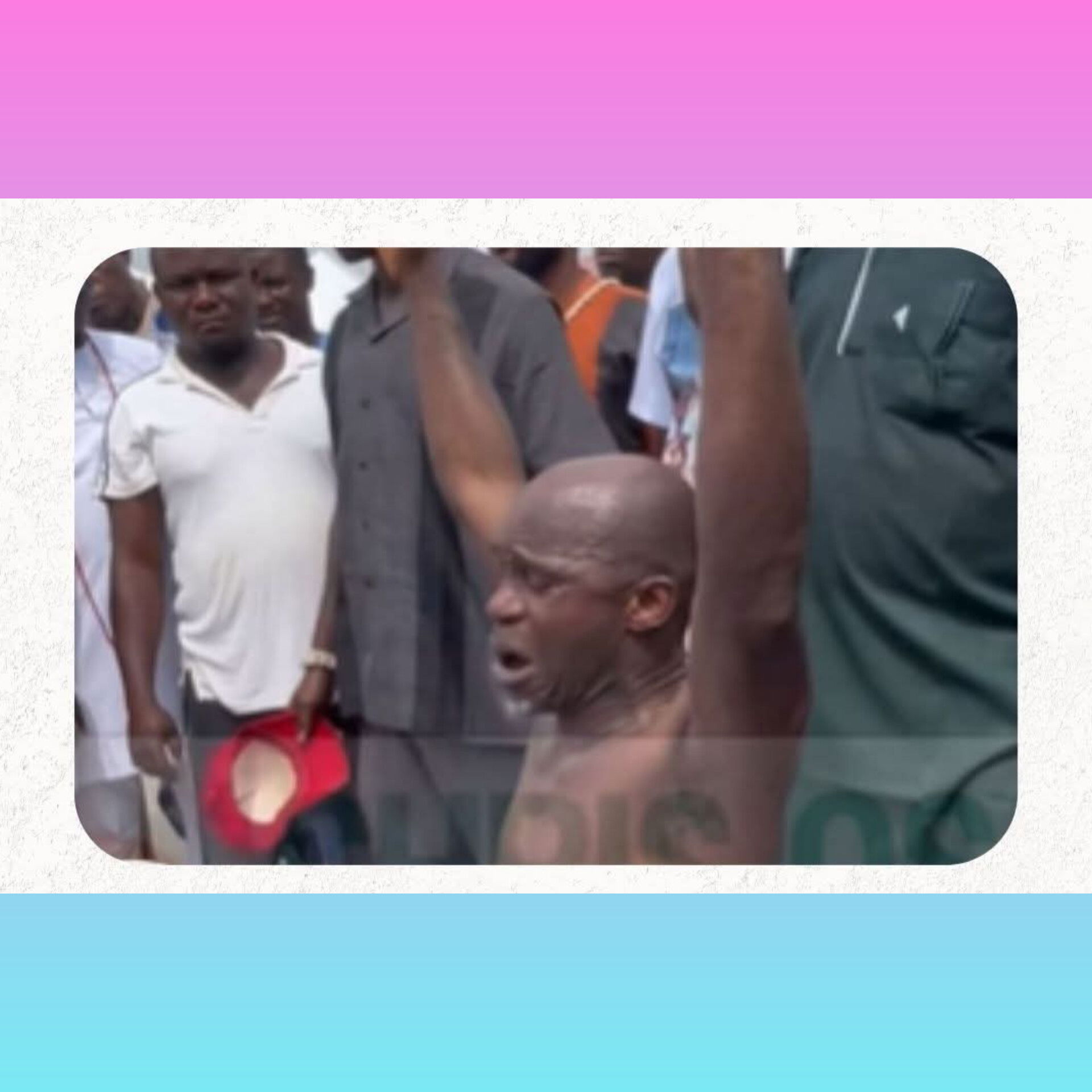
Beyond the Headline: A Call for Respect, Dialogue, and Our Shared Humanity
Let’s talk about something that’s been buzzing online. You might have seen the startling headline: “VIDEO: Thugs Allegedly Acting For Benin Traditional Council Assault, Strip, Haul Actor Don Pedro Obaseki To Palace Over ‘Disrespect’ Claims.” It’s a lot to take in. The video clips are distressing, the allegations are serious, and the entire situation leaves a heavy feeling in the pit of your stomach. It’s a moment that sparks instant reactions—outrage, defensiveness, confusion.
Before we get swept away by the chaos of the internet, let’s pause. Let’s take a deep breath and look at this not just as a sensational story, but as a profound moment for reflection. This isn't just about one actor or one council; it's about the delicate, often painful, intersection of tradition, modern expression, and human dignity. And within this complexity, there’s a powerful opportunity for growth—for all of us.
First, acknowledge the human being at the center. Don Pedro Obaseki, a creative person, a public figure, reportedly subjected to a deeply humiliating and violent experience. Regardless of any preceding words or actions, the imagery of assault and forced stripping is a visceral violation. It immediately triggers our fundamental sense of justice. Every individual deserves safety and respect for their bodily autonomy. Let’s start from that place of shared humanity. The fear and humiliation he must have felt are real, and our first instinct should be empathy. That empathy isn’t an accusation; it’s the bedrock of a compassionate community.
Now, let’s consider the other side of the claim: “Disrespect.” This is a powerful word, especially in the context of the rich, ancient, and deeply revered Benin tradition. For centuries, the Benin Kingdom has stood as a beacon of history, culture, and resilience. Its traditions are not mere customs; they are the living, breathing soul of a people, a sacred inheritance passed down through generations. The Benin Traditional Council are the custodians of this priceless heritage. To them, disrespect isn’t just an insult to a person; it’s perceived as an affront to the ancestors, to the collective memory, and to the spiritual identity of an entire nation.
This is where the clash occurs—between the instantaneous, global, and sometimes irreverent world of social media and celebrity culture, and the timeless, sacred, and protocol-driven world of tradition. What might be seen as “edgy content” or “free speech” in one sphere can be experienced as a deep, cultural wound in another. We have to try to understand both perspectives. The pain of those who feel their most sacred institutions are being mocked is also real.
However—and this is a crucial however—the alleged method reported in the headline creates a tragic spiral. Violence and public humiliation are never the tools for restoring respect. In fact, they often achieve the opposite. They overshadow the original message, cloud the issue of cultural preservation, and create a new, potentially deeper wound. They turn a conversation about reverence into a crisis about human rights and justice. The use of force, especially by individuals described as “thugs,” undermines the very dignity of the tradition it seeks to protect. It makes the guardians look like oppressors, and that is a narrative no heritage deserves.
So, where do we go from here? This moment, as difficult as it is, can be a turning point. It’s a stark reminder that we have work to do. Here’s where our motivation kicks in. Let’s be motivated to build bridges, not burn them.
1. Let’s Champion Dialogue Over Retribution. The answer isn’t in more angry tweets or polarizing camps. It’s in courageous, face-to-face conversation. Imagine if, before tensions escalated, there was a channel for the Traditional Council to express their grievance to Don Pedro directly, or for him to understand the impact of his actions within a formal, respectful setting. We need to create and normalize these pathways. Elders and youth, traditionalists and creatives, need to be in constant, respectful dialogue.
2. Let’s Educate and Be Educated. For those of us in the modern, fast-paced world, let’s be motivated to learn. Before we comment on traditions, let’s seek to understand their history and significance. True respect is born from understanding. Conversely, traditional institutions can also educate by openly sharing the beauty and meaning of their protocols in a way that engages younger generations, making them feel included rather than lectured.
3. Let’s Uphold Law and Human Dignity Universally. Our motivation must be towards a society where no one is above the law, and no one is beneath its protection. Allegations of assault must be investigated thoroughly and impartially by the proper authorities. This ensures justice is served not by mobs, but by a system that protects everyone—the citizen and the institution alike. A strong, fair legal system is the best protector of both cultural heritage and individual rights.
4. Let’s Use Our Platforms Wisely. As content creators, actors, influencers, and even just as individuals with social media accounts, we have power. With that power comes responsibility. We can be motivated to use our voices to entertain, challenge, and uplift without unnecessarily tearing down what others hold sacred. Creativity and respect are not enemies; they can be powerful allies.
Friend, the story of Don Pedro Obaseki and the Benin Traditional Council is a painful chapter. But it doesn’t have to be the whole book. Let’s close this chapter not with bitterness, but with a renewed commitment to do better.
Let’s be the generation that doesn’t just shout about problems but builds solutions. Let’s be the ones who honor our profound past without sacrificing the dignity of our present. Let’s have the difficult conversations with open hearts, listen more than we speak, and choose understanding over assumption.
This is our shared society, our shared Nigeria, with its breathtaking tapestry of culture and modern vitality. We are all custodians of its future. Let’s be motivated to weave that future with threads of respect, dialogue, and an unshakable commitment to each other’s humanity. The work starts now, and it starts with us.