

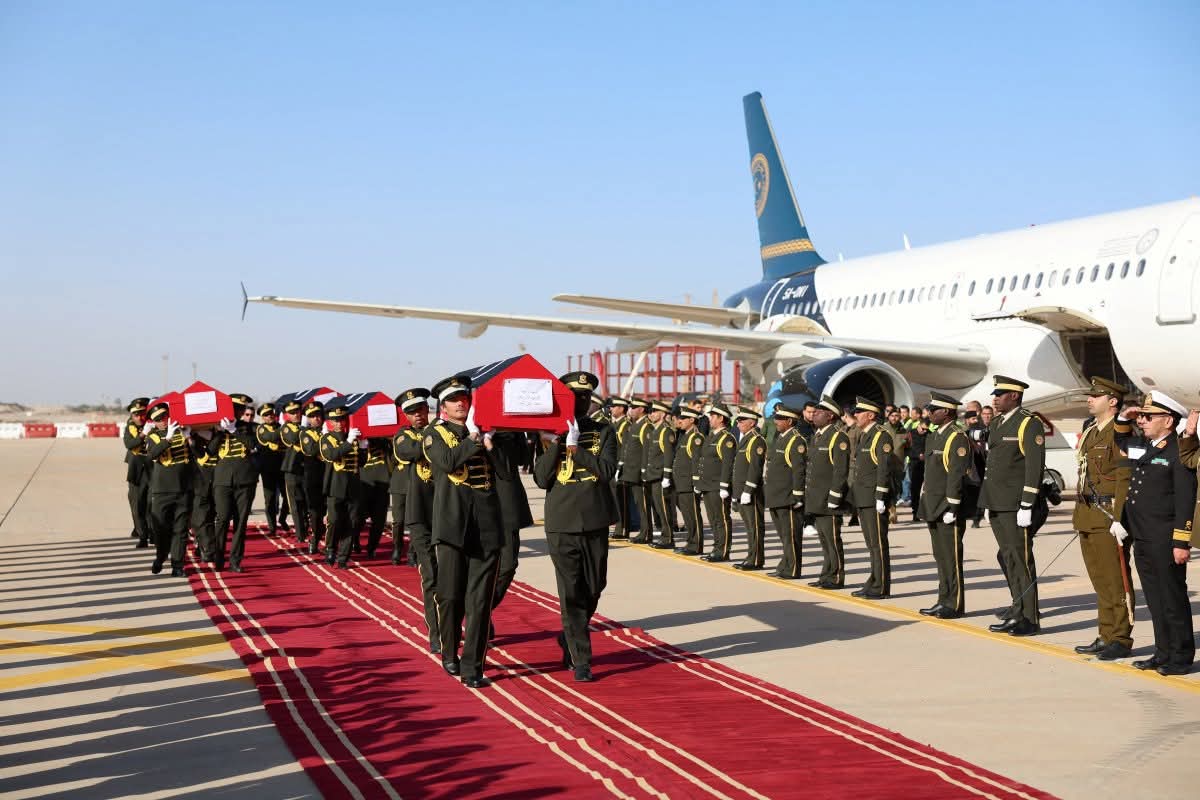
Amid the sun-scorched silence of a nation long fractured, the coastal city of Misrata stood still. On a day heavy with symbolism and sorrow, Libya laid to rest one of its most prominent and controversial military figures, General Mohamed al-Haddad, the Chief of Staff of the Libyan Army. The funeral, held not in the capital, Tripoli, nor in the eastern stronghold of Benghazi, but in the fiercely independent western city of Misrata, was a poignant tableau of Libya’s complex and fragmented reality. It was a ceremony that was as much a farewell to a soldier as it was a stark reflection of a country still searching for a cohesive identity a decade after its revolution.
General al-Haddad’s journey was inextricably woven into the turbulent tapestry of modern Libya. A career officer under the Gaddafi regime, his path, like that of the nation itself, took a dramatic turn in 2011. When the uprising erupted, al-Haddad, then a major, made the pivotal decision to defect from Gaddafi’s forces. He joined the revolutionary brigades, bringing with him valuable military expertise to the often-disorganized rebel factions. His rise to prominence was cemented during the brutal, months-long siege of his hometown, Misrata, which endured some of the conflict's most horrific violence. His leadership there forged a deep, unbreakable bond with the city’s powerful militias and its people, a bond that would define his political and military capital in the years to come.
In the chaotic aftermath of Gaddafi’s fall, al-Haddad navigated the shifting sands of Libya’s political quagmire. He aligned himself with the internationally recognized Government of National Accord (GNA) based in Tripoli, and in 2021, was appointed Chief of the General Staff. Yet, his title belied a harsh truth: Libya had no unified national army. Instead, power was—and remains—dispersed among a patchwork of regional militias, tribal alliances, and city-states, each with its own chains of command and sources of funding. Al-Haddad’s authority was largely derived from his influence over the constellation of Misratan and other western Libyan armed groups that formed the backbone of the GNA’s defensive capabilities, particularly during the failed offensive by eastern commander Khalifa Haftar’s Libyan National Army to seize Tripoli.
His funeral, therefore, was less a state ceremony and more a powerful display of regional and factional loyalty. The procession through Misrata’s streets was attended by thousands, a sea of mourners interspersed with the uniforms of myriad militias. High-ranking officials from Tripoli’s administration were present, paying their respects to a key pillar of their military alliance. But the conspicuous absence of representatives from the rival administration in the east, and the subdued presence of figures from other western cities like Zintan, spoke volumes. Libya was burying a western commander, a Misratan hero, not a national unifying figure. The gunfire that punctuated the air—a traditional Libyan salute—was fired by militiamen, not by a disciplined, national honor guard.
The location of the burial itself was a calculated statement. By choosing Misrata over a national cemetery, the ceremony anchored al-Haddad’s legacy firmly in the soil of his city and his region. It reinforced the perception that in today’s Libya, primary loyalties are local. A man’s ultimate allegiance, and in death his final resting place, is to his city, his tribe, or his militia coalition, not to the abstract concept of a Libyan nation-state that has failed to materialize. This localization of power and identity is the central challenge to Libya’s stability, and the funeral served as a somber reminder of that enduring divide.
Beyond the immediate politics of unity and division, General al-Haddad’s death opens a critical vacuum. His role was that of a linchpin, a mediator of sorts between the formal, but weak, institutions in Tripoli and the hard power of the Misratan armed groups. He possessed a degree of credibility and leverage that was personal, built on shared history and survival. The question now looming over the fragile political landscape is who, if anyone, can step into that role. The scramble to succeed him will not merely be a bureaucratic appointment; it will be a tense negotiation among armed factions, political blocs in Tripoli, and foreign patrons, each seeking to ensure the new military chief aligns with their interests.

Internationally, the funeral was watched closely by the foreign powers entangled in Libya’s conflict. Turkey, which provided critical military support to the GNA and Misratan forces during Haftar’s offensive, lost a trusted interlocutor. Meanwhile, figures in eastern Libya and their foreign backers may see an opportunity in this moment of transition and potential instability in the west. The delicate, stalled negotiations towards national elections and the unification of security institutions just became more complicated. Al-Haddad was a known entity in a labyrinth of unknown variables; his passing injects a new element of uncertainty into an already fraught process.
As the dust settled over the new grave in Misrata, Libya was left to contemplate not just the loss of a man, but the enduring specter of its own divisions. The funeral for General Mohamed al-Haddad was a ceremony of poignant contrasts: it demonstrated profound local solidarity while exposing the absence of national unity; it honored a man who held the title of a national army chief while being laid to rest as a regional champion. His story—from Gaddafi officer to revolutionary defector to factional military leader—mirrors Libya’s own disjointed and unresolved journey. To rest in Misrata is to rest in a piece of Libya, but not in a Libya that is whole. The path forward remains obscured, and the challenge of building a nation where loyalty transcends locality endures, as enduring as the silent sands of the country he served in fragments.