

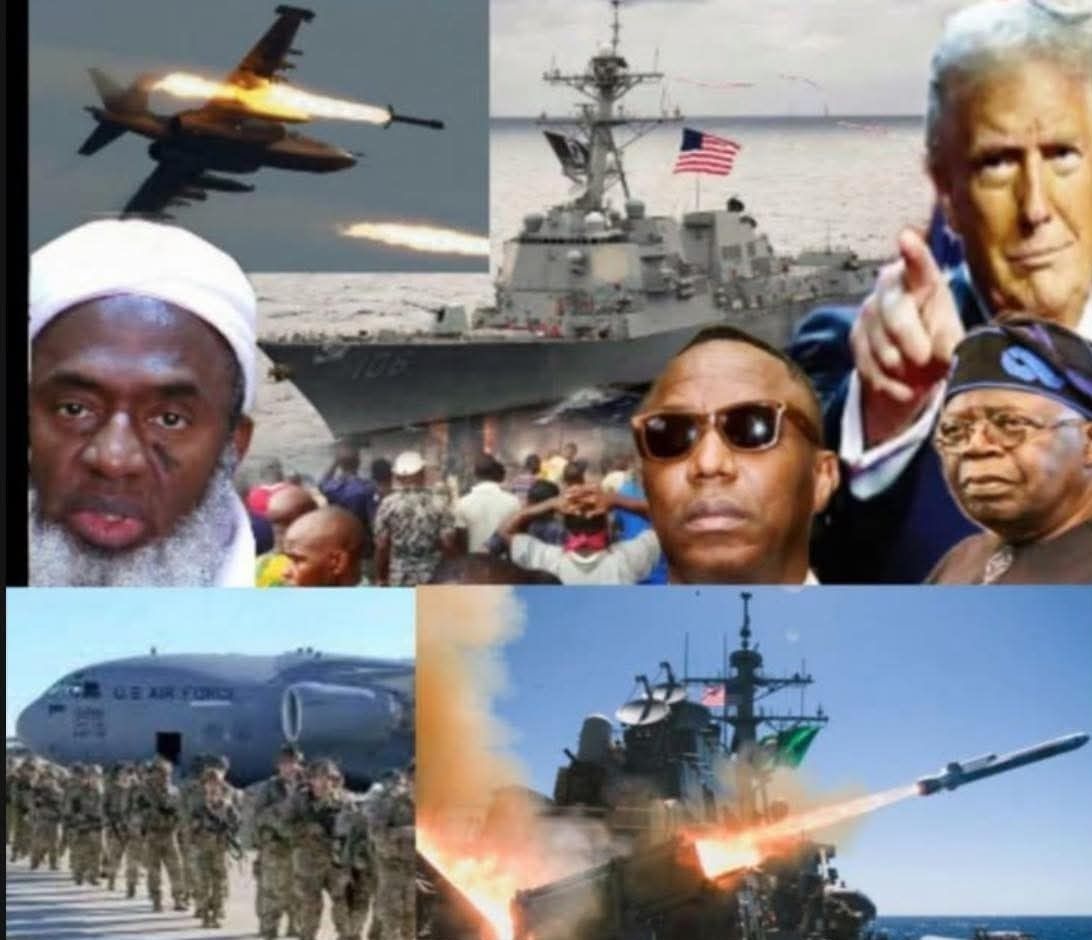
A recent wave of social media commentary, often expressed in the evocative and blended lexicon of Nigerian Pidgin and internet slang, has highlighted a stark and emotionally charged geopolitical dilemma. The core sentiment, distilled from phrases like “US Military Wan Kill Bandits Children Finish” and “Don Dey Cry Over USA Striking Bandits,” revolves around a desperate appeal for external intervention in Nigeria’s protracted security crisis. This outcry, which culminates in a plea for President Bola Tinubu to “Do Something Before Trump Go Send All Of Them To Rip,” is more than just viral frustration. It is a raw symptom of a deep national anguish and a revealing commentary on the erosion of trust in domestic institutions, forcing a painful conversation about sovereignty, efficacy, and the human cost of failure.
For over a decade, Nigeria has been embroiled in a multi-faceted security crisis. The northeastern region continues to grapple with the insurgency of Boko Haram and its splinter faction, the Islamic State West Africa Province (ISWAP). More expansively, the northwestern and central regions are plagued by what are loosely termed “bandits” – armed groups that engage in mass kidnappings for ransom, village raids, cattle rustling, and territorial control. These criminals have shut down schools, displaced thousands, and crippled local economies. The Nigerian military, though engaged on multiple fronts, has struggled to contain the violence, which is often fueled by a complex mix of historical grievances, economic desperation, climate change, and weak governance.
It is within this context of perceived futility that the public’s gaze has turned outward. The notion of the United States “striking bandits” directly taps into a visible global precedent: U.S. drone warfare and direct action in theaters like Somalia, Syria, and Afghanistan. The sentiment argues: if America can target terrorist cells abroad with precision, why not here, where communities are under siege? This reflection is often coupled with a cynical observation of the U.S. reaction to its own citizens being affected—“Don Dey Cry Over USA Striking Bandits For Nigeria”—suggesting that only direct American interests prompt decisive action. Underlying this is a bitter irony: the very people calling for foreign strikes also mourn the potential “children of the bandits,” acknowledging the tragic, cyclical nature of violence that often claims the innocent alongside the guilty.
The appeal is specifically directed at President Bola Tinubu, with a stark warning to act “before Trump go send all of them to rip.” This phrase is loaded with political subtext. It references the possibility of a second Donald Trump administration, characterized by an unpredictable, unilateral, and often ruthless approach to foreign policy. The public message is twofold. First, it is an indictment of the current government’s capacity: “We have lost faith in your ability to solve this, so we are looking to a foreign strongman.” Second, it is a strategic threat: if you, our leader, do not act, someone else will, and you may not have control over the consequences. It frames U.S. intervention not as a hopeful request but as a terrifying inevitability if local leadership fails.
However, the desire for U.S. drone strikes on Nigerian soil is a geopolitical minefield. The principle of national sovereignty is sacrosanct in international law. A U.S. kinetic strike inside Nigeria without the explicit, ongoing consent of the Nigerian government would constitute a grave violation of that sovereignty, setting a dangerous precedent and likely triggering a massive diplomatic rupture. It would be viewed as an act of war by many within the country and across the African continent, resonating with painful histories of colonial and neo-colonial imposition.
Furthermore, the U.S. itself operates under strict legal and policy frameworks for the use of force abroad. The 2001 Authorization for Use of Military Force (AUMF) is typically cited for actions against groups like Al-Qaeda and ISIS. Applying this to Nigerian “bandit” groups, which are largely driven by criminal rather than global jihadist motives (though the lines are increasingly blurred), would be a significant and contentious legal stretch. The risk of civilian casualties in densely populated villages could also lead to a propaganda victory for the armed groups and turn local populations against both the Nigerian and U.S. governments.
The more plausible and current form of U.S. involvement is not direct strikes, but enhanced security cooperation. This includes intelligence sharing, training for Nigerian Special Forces, provision of surveillance technology, and logistical support. The U.S. has repeatedly stated its commitment to helping Nigeria fight terrorism, but within the bounds of partnership, not paternalism. The real pressure on Tinubu’s administration is to create the conditions for this partnership to be more effective—which involves tackling corruption in the security sector, improving intelligence coordination, and addressing the root causes of the conflict.
Ultimately, the viral cry for American intervention is a mirror held up to Nigeria’s domestic reality. It reflects a profound crisis of confidence. When citizens openly wish for a foreign power to conduct military operations on their own soil, it signals a breakdown in the social contract. The state’s most fundamental duty is to provide security for its citizens, and the perception of failure in this duty leads to desperation. This sentiment is not a genuine blueprint for policy but a hyperbolic expression of pain, fear, and exhaustion.
The solution, therefore, cannot be found solely in Washington or in the prospect of drone strikes. It must be forged in Abuja and in state capitals across the affected regions. It requires a comprehensive strategy that combines genuine military reform and effectiveness with a relentless push for socio-economic development, deradicalization programs, and community dialogue. The international community, including the U.S., can play a crucial supporting role in this, but the lead must come from Nigeria.
The poignant, slang-laden plea that sparked this discussion ends with a tearful emoji (😭💔). This is the heart of the matter. It is the heartbreak of a nation weary of violence, skeptical of its leaders, and caught between the rock of sovereign pride and the hard place of existential threat. The conversation is no longer about if something must be done, but who will do it and how before the fabric of the nation is torn beyond repair. The public is not just asking for missiles from the sky; they are screaming for a functional state on the ground.